Discover Top Advanced Trading Monitors for Trading
Advanced trading monitors are specialized computer displays designed to help traders view financial information clearly and efficiently. Whether someone follows stocks, commodities, foreign exchange, cryptocurrencies, or other financial markets, a well-organized display can make market information easier to understand.
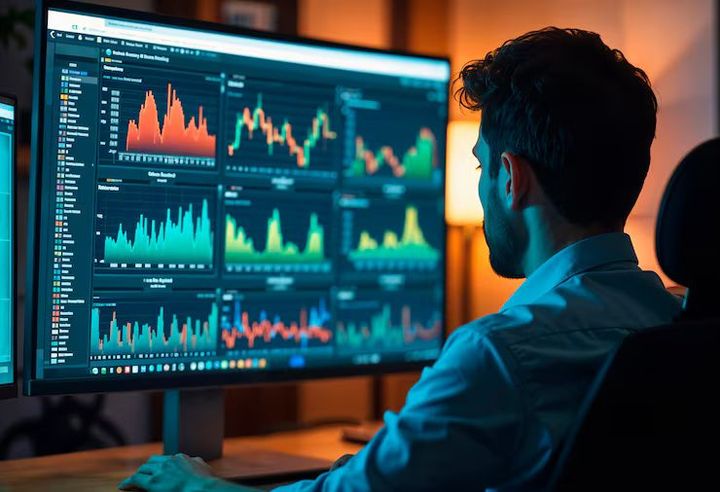
Financial markets generate enormous amounts of information every second. Price charts, economic calendars, market news, technical indicators, order windows, and portfolio dashboards often need to remain visible at the same time. Standard computer displays may provide limited workspace, while advanced trading monitors allow users to arrange multiple windows without constant switching.
Modern trading setups have evolved significantly over the past decade. Earlier workstations commonly relied on several smaller monitors. Today, many users also prefer high-resolution displays, ultrawide monitors, curved screens, and professional IPS panels that combine large workspaces with excellent image clarity.
The purpose of advanced trading monitors is not to predict market performance. Instead, they improve how financial information is displayed, making it easier to observe trends, compare charts, monitor different assets, and manage analytical workflows.
| Trading Monitor Feature | General Purpose | Benefit |
|---|---|---|
| Large Screen Size | Display multiple windows | Better workspace organization |
| High Resolution | Sharper charts and text | Improved readability |
| IPS Panel | Consistent image quality | Better viewing angles |
| Adjustable Stand | Comfortable positioning | Reduced physical strain |
| Multiple Ports | Connect several devices | Flexible workstation setup |
| Eye Comfort Features | Long viewing sessions | Reduced eye fatigue |
Importance
Advanced trading monitors have become increasingly important because financial markets operate continuously across global regions. Investors, analysts, educators, researchers, and active traders all rely on accurate visual information.
A larger and clearer display allows users to observe several market conditions simultaneously. Instead of repeatedly changing between applications, multiple charts and analytical tools remain visible throughout the session.
Some important reasons these monitors matter include:
- Better visualization of market trends
- Improved organization of financial dashboards
- Easier comparison of multiple assets
- Clearer technical chart analysis
- Enhanced productivity during market research
High-resolution displays have become especially valuable for users who analyze numerous indicators. More pixels allow additional information to appear without making text difficult to read.
Ultrawide trading monitors are also becoming popular because they reduce the gaps created by traditional multi-monitor arrangements. Users can spread several applications across one continuous workspace while maintaining better visibility.
Professional trading monitors also emphasize comfort. Since many market participants spend several hours reviewing charts, ergonomic adjustments such as height, tilt, swivel, and VESA mounting support healthier workstation positioning.
Eye-care technologies, including flicker reduction, anti-glare coatings, and low blue light modes, help create a more comfortable viewing experience during extended analytical sessions.
Recent Updates
The trading monitor industry has continued to evolve throughout 2025 and into 2026 as display manufacturers focus on productivity rather than entertainment alone.
Several noticeable trends have emerged during the past year.
Higher Resolution Displays
More professional users are adopting QHD and 4K trading monitors. These displays provide significantly more desktop space, allowing several market charts to remain visible simultaneously.
Larger Ultrawide Displays
Ultrawide monitors continue to gain popularity among financial professionals. Displays equivalent to two traditional monitors reduce bezel interruptions while maintaining a single continuous workspace.
Improved Mini LED Technology
Mini LED displays have become more common in productivity-focused monitors. These panels improve brightness control and contrast while maintaining excellent visibility for financial charts.
Better Connectivity
Modern trading monitors increasingly include:
- DisplayPort
- HDMI
- USB-C connectivity
- USB hubs
- Daisy-chain support
These features simplify workstation organization and reduce cable management challenges.
Enhanced Eye Comfort
Manufacturers continue improving:
- Flicker reduction
- Low blue light modes
- Anti-reflective coatings
- Automatic brightness adjustment
These improvements help users working with financial platforms for extended periods.
Flexible Multi-Monitor Support
Monitor arms and VESA-compatible mounting systems continue to grow in popularity, allowing users to arrange multiple displays according to individual workflow preferences.
Laws or Policies
Advanced trading monitors themselves are not directly regulated as financial products. However, they are commonly used within industries that operate under financial regulations.
Different countries maintain regulatory frameworks governing financial trading activities rather than monitor hardware.
Examples include:
| Area | General Regulatory Focus |
|---|---|
| Financial Markets | Fair trading practices |
| Electronic Trading | Market transparency |
| Data Privacy | Protection of personal information |
| Workplace Safety | Ergonomic workstation guidance |
| Electronic Equipment | Product safety and energy standards |
Many countries also establish standards covering electronic equipment, including:
- Electrical safety
- Energy efficiency
- Environmental compliance
- Electromagnetic compatibility
- Consumer protection requirements
Organizations operating professional trading environments often follow workplace ergonomic recommendations that encourage proper monitor height, viewing distance, lighting, and posture to reduce long-term physical strain.
Users should also ensure that trading software, financial data platforms, and electronic communication systems comply with applicable financial regulations within their jurisdiction.
Tools and Resources
Various tools and learning resources help users create efficient trading workspaces alongside advanced trading monitors.
Display Configuration Tools
Operating systems include built-in display settings that support:
- Multi-monitor layouts
- Resolution adjustments
- Display scaling
- Screen orientation
- Color calibration
Market Analysis Platforms
Financial analysis platforms commonly provide:
- Interactive price charts
- Technical indicators
- Market watchlists
- Economic calendars
- Portfolio dashboards
Screen Layout Templates
Workspace templates help organize:
- Chart windows
- News panels
- Market scanners
- Watchlists
- Order interfaces
Ergonomic Resources
Educational resources covering workstation ergonomics explain:
- Proper monitor height
- Viewing distance
- Chair positioning
- Desk organization
- Lighting recommendations
Performance Monitoring Utilities
Hardware monitoring applications assist users in tracking:
- Graphics performance
- Display resolution
- Refresh rate
- Multiple monitor detection
- System resource usage
These resources help users maintain an efficient and organized trading environment without unnecessary complexity.
Comparing Popular Trading Monitor Configurations
Different monitor layouts suit different trading styles and workspace requirements.
| Configuration | Advantages | Suitable For |
|---|---|---|
| Single Full HD Monitor | Simple workspace | Beginners |
| Single QHD Monitor | More chart space | Regular market analysis |
| Single 4K Monitor | High detail | Professional chart analysis |
| Dual Monitors | Better task separation | Active traders |
| Four Monitor Setup | Multiple markets | Multi-asset analysis |
| Ultrawide Monitor | Continuous workspace | Technical chart users |
| Curved Ultrawide | Comfortable viewing | Extended analytical sessions |
Choosing the appropriate setup depends on available desk space, computer hardware, preferred software, and the number of applications used simultaneously.
Choosing an Advanced Trading Monitor
Several specifications should be evaluated before selecting a trading monitor.
Screen Size
Displays between 24 and 32 inches provide sufficient workspace for most financial applications.
Resolution
Higher resolutions allow more charts and analytical tools to remain visible without excessive zooming.
Panel Technology
IPS panels continue to be widely recommended because they provide:
- Accurate colors
- Wide viewing angles
- Stable brightness
- Clear text
Refresh Rate
For most trading applications:
- 60–75 Hz supports everyday market analysis.
- Higher refresh rates may provide smoother movement when monitoring rapidly updating charts.
Connectivity
Useful connection options include:
- HDMI
- DisplayPort
- USB-C
- USB hub functionality
Ergonomics
Comfort features remain important for long working sessions:
- Height adjustment
- Tilt adjustment
- Swivel capability
- Pivot mode
- VESA compatibility
Frequently Asked Questions
What makes an advanced trading monitor different from a regular monitor?
Advanced trading monitors typically provide higher resolutions, larger screen sizes, professional panel technology, ergonomic adjustments, and improved connectivity that help organize multiple financial applications simultaneously.
Is a 4K monitor useful for financial chart analysis?
Yes. A 4K monitor provides greater screen space and sharper image quality, allowing multiple charts, technical indicators, and market dashboards to remain visible together.
Are ultrawide monitors suitable for trading?
Ultrawide monitors create one continuous workspace that accommodates several charts without the bezels found in multi-monitor arrangements, making market analysis more organized.
Which panel technology is commonly recommended?
IPS panels are widely preferred because they provide consistent color accuracy, excellent viewing angles, and stable image quality across larger displays.
Why are ergonomic features important?
Height adjustment, tilt, swivel, anti-glare coatings, and eye comfort technologies support better posture and reduce visual fatigue during extended market analysis sessions.
Conclusion
Advanced trading monitors have become an essential part of modern financial workstations by improving how market information is displayed and organized. Larger screens, higher resolutions, IPS technology, ultrawide formats, and ergonomic features enable users to analyze charts, monitor financial data, and manage multiple applications more efficiently.
Disclaimer: The information provided in this article is for informational purposes only. We do not make any claims or guarantees regarding the accuracy, reliability, or completeness of the information presented. The content is not intended as professional financial, investment, tax, or legal advice and should not be relied upon as such. Readers are encouraged to conduct their own research and consult with appropriate professionals (such as financial advisors, investment specialists, tax consultants, or attorneys) before making any financial decisions based on the information provided in this article. All investments and financial strategies carry risks, including potential loss of principal. Past performance is not indicative of future results. Your financial situation is unique, and what works for others may not be suitable for you.