Industrial Automation Development: Edge AI & Smart Factory Technologies
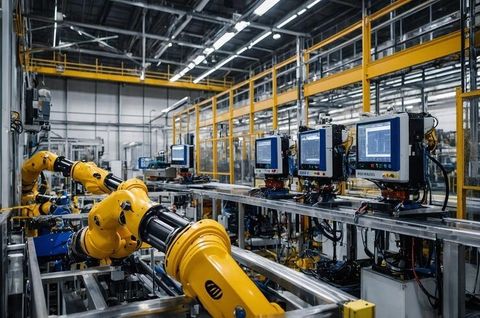
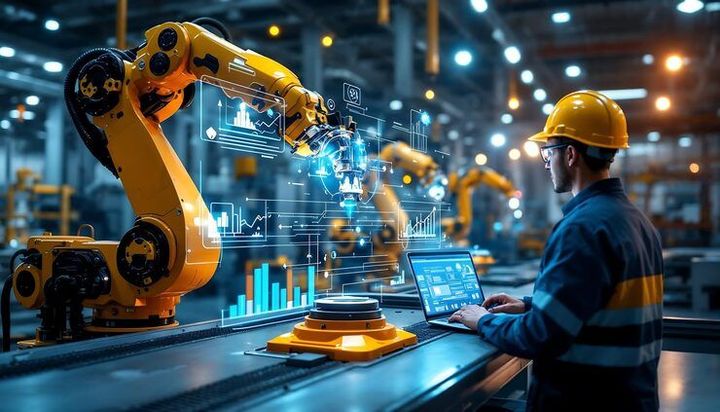
Industrial automation refers to the use of control systems, software, sensors, robotics, industrial computers, and connected equipment to perform manufacturing tasks with limited manual intervention. Traditional automation focused mainly on repeatable machine operations. Modern industrial automation development is moving toward connected, intelligent, and adaptive production environments.
A smart factory combines automation with Industrial Internet of Things technology, artificial intelligence, machine learning, cloud platforms, Edge AI, robotics, and real-time data analysis. Instead of simply following fixed instructions, connected systems can analyze operational information and support faster decisions.
Edge AI is particularly important because it allows artificial intelligence models to process data close to where that data is generated. A camera inspecting a production line, for example, can analyze images locally rather than sending every image to a distant data center.
This approach can reduce communication delays and support applications where rapid responses are important.
Modern industrial automation development commonly includes:
- Programmable logic controllers and industrial computers
- Industrial robots and collaborative robots
- Machine vision systems
- Industrial sensors and connected devices
- Edge computing and Edge AI
- Digital twins and simulation
- Predictive analytics
- Automated material handling
- Manufacturing execution systems
- Industrial cybersecurity technologies
The overall goal is not simply to replace people with machines. A more practical objective is to create systems where people and intelligent technologies work together.
Importance
Smart manufacturing matters because factories increasingly need greater visibility into equipment, production processes, energy consumption, quality, and operational risks.
Traditional production environments may depend on information collected manually or reviewed after an event occurs. Connected automation can provide information continuously, allowing teams to identify unusual conditions earlier.
Edge AI can be useful when decisions need to happen close to equipment. For example, machine-vision systems can inspect components during production and identify visual differences without depending entirely on a remote computing environment.
Industrial automation can address several common manufacturing challenges:
- Unplanned equipment downtime
- Quality variations
- Slow production monitoring
- High volumes of machine data
- Complex maintenance planning
- Energy-management challenges
- Limited visibility across production stages
- Cybersecurity risks from connected equipment
The technology also affects engineers, machine operators, maintenance teams, production planners, software developers, cybersecurity specialists, and managers.
A major change is the movement from isolated automation toward connected automation. The World Economic Forum's Intelligent Industrial Operations Outlook 2026, published on April 16, 2026, describes industrial operations as moving toward intelligent, connected, and increasingly autonomous systems, with humans and intelligent systems working together in real time.
Key Technologies in Smart Factories
| Technology | Main Purpose | Typical Application |
|---|---|---|
| Edge AI | Local data analysis | Machine vision |
| IIoT | Equipment connectivity | Machine monitoring |
| Digital Twins | Virtual process representation | Simulation |
| Robotics | Automated physical tasks | Assembly |
| Machine Vision | Visual inspection | Quality control |
| Predictive Analytics | Pattern identification | Maintenance planning |
| Cloud Computing | Large-scale data processing | Production analytics |
| Cybersecurity | System protection | Industrial networks |
The technologies are often interconnected rather than deployed individually. A sensor can collect information, an Edge AI system can analyze it, a control system can respond, and a cloud platform can store historical information for further analysis.
Recent Updates in Industrial Automation
Edge AI and Physical AI
One of the strongest developments during 2025 and 2026 has been the movement toward AI systems that interact more directly with physical industrial environments.
The World Economic Forum's 2026 outlook highlights AI, physical AI, and other frontier technologies as important forces reshaping how industrial organizations plan, produce, move, and improve operations.
This trend is relevant to robotics, automated inspection, warehouse systems, autonomous equipment, and intelligent production lines.
New Manufacturing AI Research
In July 2026, the U.S. National Institute of Standards and Technology updated its Artificial Intelligence for Manufacturing initiative. The program focuses on measurement methods, human-AI collaboration, interoperability, evaluation, and standards for manufacturing applications.
This development shows that industrial AI is moving beyond experimentation. Reliable measurement, interoperability, and human oversight are becoming important parts of industrial automation development.
AI and Manufacturing Resilience
In December 2025, NIST announced investments to establish centers focused on AI for U.S. manufacturing and critical infrastructure. The initiative includes work involving AI-driven tools, manufacturing productivity, cybersecurity, and resilient manufacturing.
These developments demonstrate that AI is increasingly being considered part of broader manufacturing infrastructure rather than simply an experimental software technology.
Cybersecurity Development
Connected factories also increase the importance of industrial cybersecurity.
In September 2025, NIST published an initial public draft of its Cybersecurity Framework 2.0 Manufacturing Profile. The draft aligned manufacturing guidance with CSF 2.0 and added attention to areas such as supply-chain risk management, platform security, and technology infrastructure resilience.
This is particularly relevant as more industrial equipment becomes connected to enterprise networks and data platforms.
Laws and Policies Affecting Industrial Automation
Artificial Intelligence Governance
Industrial automation increasingly intersects with AI governance, data protection, cybersecurity, workplace safety, and product regulations.
Requirements differ by country and by the type of technology being deployed. An AI system used only for equipment monitoring may face different requirements from an AI system that affects workers, safety decisions, or regulated processes.
In the United States, the NIST AI Risk Management Framework provides a voluntary approach for organizations designing, developing, deploying, or using AI systems. It emphasizes trustworthy and responsible AI risk management.
NIST also released a concept note in April 2026 for an AI RMF profile focused on trustworthy AI in critical infrastructure.
India and Data Protection
For manufacturers operating in India, connected factory systems may process information that falls within digital personal data rules, particularly when employee, visitor, contractor, or other identifiable information is involved.
India's Ministry of Electronics and Information Technology published the Digital Personal Data Protection Rules, 2025, on November 14, 2025. The ministry also published information concerning the enforcement timeline and establishment of the Data Protection Board of India.
Therefore, organizations using smart factory technologies should distinguish machine-generated operational data from personal data and evaluate applicable obligations accordingly.
European Regulatory Environment
Organizations operating in or supplying systems into the European market also need to consider the EU's developing AI regulatory framework, along with machinery, product-safety, cybersecurity, and data-protection requirements.
The exact obligations depend on the AI application, risk classification, product category, deployment environment, and role of the organization.
For this reason, industrial automation development should include regulatory assessment during system design rather than treating compliance as a final-stage activity.
Tools and Resources for Industrial Automation Development
Industrial Data Tools
Manufacturers can use general categories of tools to understand and improve automated production systems:
- PLC programming and simulation software
- Industrial IoT platforms
- Edge computing environments
- Machine-learning development tools
- Digital twin platforms
- SCADA and monitoring systems
- Manufacturing analytics dashboards
- Machine-vision development tools
- Industrial network monitoring tools
- Cybersecurity assessment frameworks
Planning and Evaluation Tools
Before implementing advanced automation, teams can evaluate:
- Equipment connectivity
- Data quality
- Network architecture
- AI model accuracy
- Response time
- Human oversight
- Cybersecurity exposure
- System interoperability
- Maintenance requirements
- Regulatory responsibilities
NIST's Industrial Artificial Intelligence Management and Metrology work specifically addresses evaluation, measurement, trust, and management of AI systems in industrial environments.
A structured evaluation can help prevent a common mistake: introducing sophisticated AI technology without establishing whether the available data and production environment can support it.
Useful Learning Resources
General learning resources include:
- AI risk-management frameworks
- Industrial cybersecurity frameworks
- PLC and robotics training materials
- IIoT architecture guides
- Digital-twin tutorials
- Machine-vision documentation
- Manufacturing data analytics courses
- Industrial safety standards
- Technical simulation environments
NIST's AI RMF Playbook provides practical suggestions organized around the framework's Govern, Map, Measure, and Manage functions.
Frequently Asked Questions
What is industrial automation development?
Industrial automation development is the process of designing and improving automated manufacturing systems using control technology, sensors, robotics, software, data systems, and increasingly artificial intelligence.
What is Edge AI in manufacturing?
Edge AI means running AI processing close to the equipment or location where data is generated. In manufacturing, it can support applications such as machine vision, equipment monitoring, anomaly detection, and rapid process analysis.
How does AI support smart factories?
AI can analyze large amounts of production data, identify patterns, support quality inspection, detect unusual equipment behavior, and help people make better operational decisions. Its usefulness depends heavily on data quality, system design, validation, and appropriate human oversight.
Is cybersecurity important for automated factories?
Yes. Connected machines and industrial networks can create additional digital risks. Cybersecurity planning can include network segmentation, access controls, monitoring, secure configurations, software updates, backup procedures, and risk assessments.
Will smart factories remove the need for human workers?
Not necessarily. Modern industrial automation increasingly emphasizes human-AI collaboration. People remain important for supervision, engineering decisions, maintenance, safety, exception handling, system improvement, and organizational decision-making.
Conclusion
Industrial automation development is moving from traditional machine control toward connected and intelligent manufacturing environments. Edge AI, robotics, Industrial IoT, digital twins, machine vision, analytics, and cybersecurity are becoming important components of this transition.