Industrial Powder Filling Machines: Advanced Automation & Precision Filling Guide
Industrial powder filling machines are automated or semi-automated systems designed to measure a predetermined quantity of powdered material and place it into a container, pouch, bottle, jar, sachet, or other packaging format.
Powders can be difficult to handle because their density, particle size, moisture level, and flow characteristics can vary. Some powders flow easily, while others may become compacted or produce airborne dust. These differences make accurate powder dosing more challenging than handling many liquid or free-flowing materials.
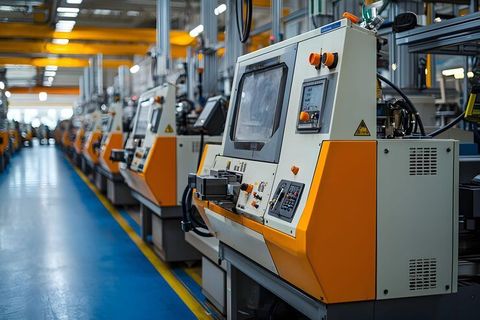
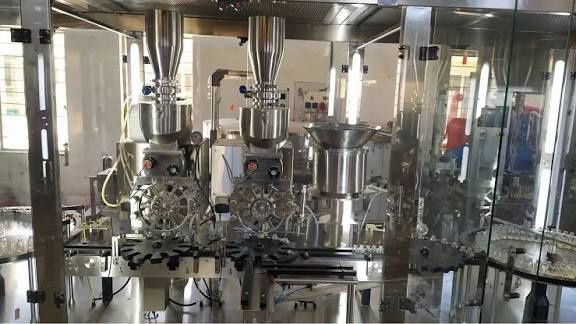
Modern powder filling equipment combines mechanical components, electronic controls, sensors, and programmable automation to manage the filling process. Depending on the application, a machine may use an auger, volumetric dosing system, gravimetric weighing system, or another controlled filling mechanism.
Common applications include powdered food ingredients, spices, nutritional powders, pharmaceutical formulations, chemical powders, detergents, pigments, and cosmetic products.
How Powder Filling Technology Works
The basic process usually involves several stages:
- Powder is transferred into a hopper or feeding system.
- The material is conditioned or agitated when necessary.
- A dosing mechanism measures a predetermined quantity.
- The measured powder moves toward the container.
- The filling nozzle directs the material into the package.
- Sensors monitor container position and machine operation.
- The filled package moves to the next packaging stage.
The exact sequence depends on the machine configuration and the characteristics of the powder.
Auger fillers are particularly common for controlled powder dosing. A rotating screw moves material through the filling system. The number of rotations and other machine parameters can be adjusted according to the required quantity and powder characteristics.
Why Industrial Powder Filling Machines Matter Today
Accurate filling is important because inconsistent quantities can affect product quality, packaging performance, inventory management, and regulatory compliance.
Automation also helps reduce dependence on repetitive manual handling. Operators can focus more on monitoring, quality checks, material preparation, and machine control instead of repeatedly measuring individual packages.
Key Problems Addressed by Automated Filling
Industrial powder filling machines can help address several common manufacturing challenges:
- Inconsistent manual measurements
- Repetitive filling operations
- Powder spillage and material waste
- Dust generation during handling
- Slow packaging cycles
- Difficult quantity control
- Variation between production batches
- Challenges associated with hygienic powder handling
Precision filling is especially important in industries where the declared quantity must remain within specified limits.
The technology also supports modern manufacturing concepts such as industrial automation, process control, smart manufacturing, production monitoring, and data-driven quality management.
Industries Using Powder Filling Equipment
Powder filling technology is used across a wide range of sectors.
Food and beverage manufacturing:
Applications can include spices, flour-based products, powdered ingredients, beverage mixes, seasoning blends, and nutritional powders.
Pharmaceutical manufacturing:
Controlled dosing is important when handling powdered formulations and other regulated materials. Equipment selection must consider hygiene, containment, cleaning, and validation requirements.
Chemical manufacturing:
Industrial powders can include cleaning compounds, additives, pigments, minerals, and other dry formulations.
Cosmetics and personal care:
Powdered cosmetic formulations require controlled filling and careful material handling.
Agricultural products:
Some agricultural formulations and dry materials require automated measurement and packaging.
Main Types of Powder Filling Machines
Different powder characteristics require different filling technologies.
| Filling Type | Basic Principle | Common Application |
|---|---|---|
| Auger Filling | Rotating screw controls powder movement | Fine and consistent powders |
| Volumetric Filling | Measured volume determines the dose | Free-flowing powders |
| Gravimetric Filling | Weight is measured directly | High-precision applications |
| Vacuum Filling | Pressure difference assists material movement | Selected fine powders |
| Multi-Head Filling | Multiple dosing points increase throughput | Larger production systems |
No single filling method is suitable for every powder. Particle size, bulk density, flowability, moisture content, static behavior, and required accuracy all influence equipment selection.
Recent Updates and Trends in Powder Filling Automation
Powder filling technology has continued to develop during 2025 and 2026, particularly around automation, traceability, hygiene, digital controls, and packaging compliance.
One important trend is the integration of programmable control systems with sensors and production monitoring. Manufacturers increasingly use digital interfaces to adjust filling parameters, monitor machine conditions, and identify process variations.
Another development is greater attention to dust management. Fine powders can create airborne particles during feeding and filling, so modern equipment may incorporate enclosed transfer areas, dust extraction, controlled feeding, and specialized filling nozzles.
Servo-driven systems are also becoming more relevant for applications requiring precise movement control. Electronic control allows filling parameters to be adjusted more consistently than purely mechanical systems.
Regulatory Developments in India During 2025–2026
India's regulatory environment for packaged products has continued to evolve. The Department of Consumer Affairs lists amendments to the Legal Metrology (Packaged Commodities) Rules during 2025 and 2026, including amendments dated February 13, 2026, and May 29, 2026. These developments are relevant to organizations involved in pre-packaged commodities because declared quantities and package information must align with applicable requirements.
For food-related powder packaging, the Food Safety and Standards Authority of India has also published regulatory updates during 2025 and 2026. In March 2026, FSSAI published updates concerning food labelling and packaging regulations, while further packaging-related draft amendments appeared during April 2026.
These developments show why automated filling systems increasingly need to work alongside accurate weighing, inspection, documentation, and quality-control procedures.
Laws, Policies, and Compliance Considerations in India
Powder filling equipment used for packaged commodities in India can be affected by the Legal Metrology Act, 2009 and the Legal Metrology (Packaged Commodities) Rules, 2011, along with subsequent amendments.
The rules cover important declarations for pre-packaged commodities, including net quantity and other package information. The Department of Consumer Affairs also identifies requirements concerning weighing and measuring instruments and their verification.
For food powders, additional requirements may apply under the Food Safety and Standards Act and associated FSSAI regulations. FSSAI maintains standards covering food products, contaminants, packaging, labelling, and other food-safety areas.
Equipment selection should therefore consider:
- Required filling accuracy
- Applicable weighing and measurement requirements
- Food-contact material requirements
- Cleaning and sanitation procedures
- Dust-control requirements
- Product contamination risks
- Package labelling requirements
- Recordkeeping and quality-control procedures
The exact compliance requirements depend on the product, packaging format, industry, and manufacturing process.
Important Features of Modern Powder Filling Machines
Modern equipment may include a combination of mechanical and digital technologies.
Programmable Controls
A programmable control system can allow operators to configure filling parameters, machine speeds, container dimensions, and other process settings.
Digital Weighing
Load cells and electronic weighing systems can help monitor the quantity placed into a package. Gravimetric systems are useful where direct weight measurement is important.
Automatic Container Detection
Sensors can identify whether a container is correctly positioned before filling begins. This can reduce incorrect filling cycles.
Dust Management
Enclosed filling areas, extraction systems, and suitable nozzle designs can help manage powder particles and maintain a cleaner working environment.
Easy Cleaning and Maintenance
For food, pharmaceutical, and other hygiene-sensitive applications, machine design should support appropriate cleaning and inspection procedures.
Tools and Resources for Powder Filling Operations
Several general tools can support the planning, operation, and evaluation of powder filling systems.
Powder Flowability Assessment
Basic laboratory tests can help determine whether a powder is free-flowing, cohesive, or prone to bridging and compaction.
Weight Accuracy Calculators
Spreadsheet-based calculators can help compare target fill weight, measured weight, deviation, average quantity, and process variation.
Production Monitoring Dashboards
Digital dashboards can track production quantities, machine status, rejected packages, downtime, and other operational indicators.
Preventive Maintenance Templates
Maintenance checklists can document inspections of augers, hoppers, sensors, filling nozzles, drive components, seals, and control systems.
Regulatory Checklists
Compliance templates can help organizations review package declarations, weighing equipment verification, food-contact requirements, documentation, and quality procedures.
Operator Training Materials
Machine manuals, standard operating procedures, cleaning instructions, safety documents, and training checklists can help maintain consistent operation.
Frequently Asked Questions
What is an industrial powder filling machine?
An industrial powder filling machine is equipment designed to measure and dispense powdered material into containers or packages using a controlled mechanical or automated filling system.
Which filling system is suitable for fine powders?
Auger-based systems are commonly used for many fine powders because a rotating screw can provide controlled material movement. However, the correct system depends on powder characteristics and the required filling method.
How does powder density affect filling accuracy?
Changes in bulk density can influence volumetric filling because the same volume may contain different amounts of material. Gravimetric systems directly measure weight and can therefore be useful where weight-based accuracy is important.
Are powder filling machines used in pharmaceutical manufacturing?
Yes. Powder filling technology can be used in pharmaceutical manufacturing, but equipment and processes must meet the applicable hygiene, containment, quality, validation, and regulatory requirements.
What factors should be considered before selecting filling equipment?
Important factors include powder flowability, particle size, bulk density, moisture content, target fill quantity, container type, production requirements, hygiene needs, dust control, accuracy expectations, and applicable regulations.
Conclusion
Industrial powder filling machines have become an important part of modern packaging automation. By combining controlled dosing, sensors, electronic controls, weighing technology, and material-handling systems, they can support consistent powder filling across many industries.