Automated Glass Processing Systems: Precision and Manufacturing Insights
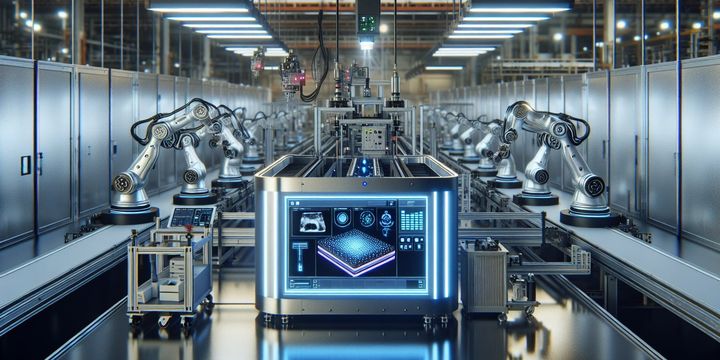
Automated glass processing systems are integrated machines and control technologies used to shape, finish, strengthen, and inspect glass with limited manual intervention. They are designed to perform repeatable operations while maintaining specified dimensions, surface quality, and production consistency.
Glass is widely used in residential buildings, commercial properties, vehicles, electronic devices, furniture, and renewable energy equipment. Each application requires particular levels of strength, transparency, dimensional accuracy, and surface finish. Manual processing can be suitable for small or specialized tasks, but larger production environments often require automation to maintain consistent results.
Automated systems help coordinate multiple manufacturing stages. For example, a production line may measure a glass sheet, cut it according to a digital design, grind its edges, clean its surface, and transfer it to another processing station.
The exact configuration depends on the glass type, product dimensions, required finish, and intended application.
How the Technology Developed
Traditional glass processing depended heavily on manual measurement, operator experience, and individual machines. As demand for larger glass panels and more complex designs increased, manufacturers adopted computer-controlled equipment and integrated production lines.
Modern systems may include:
Computer numerical control (CNC) cutting and drilling equipment
Automated glass loading and unloading mechanisms
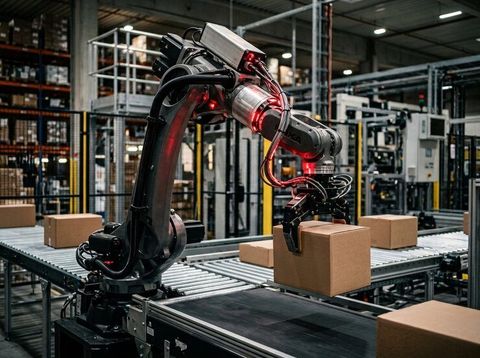
Robotic arms and vacuum lifting devices
Optical measurement and inspection sensors
Programmable logic controllers (PLCs)
Manufacturing software for production planning and monitoring
These technologies connect physical operations with digital information. This allows production teams to monitor machine status, follow processing instructions, and identify quality problems earlier.
Main Types of Automated Glass Processing Equipment
Different machines perform specific functions within the manufacturing process.
Equipment type | Main function | Common application |
|---|---|---|
CNC glass cutters | Cut glass to programmed dimensions | Windows and architectural panels |
Edge grinding machines | Smooth and shape glass edges | Doors, furniture, and façades |
Glass drilling machines | Create precise holes | Fixtures and structural fittings |
Glass washing systems | Remove dust and processing residue | Insulating glass and tempered glass |
Tempering furnaces | Heat and rapidly cool suitable glass | Safety glazing and vehicle windows |
Robotic handling systems | Move glass between production stages | Integrated manufacturing lines |
Automated inspection systems | Detect selected defects and dimensional errors | Quality assurance |
Not every production line requires all these machines. Equipment selection depends on the finished product and the processing sequence.
Why Automated Glass Processing Matters Today
Improving Precision and Product Consistency
Glass manufacturing requires accurate dimensions and carefully controlled processing conditions. Small deviations can affect fitting, assembly, appearance, or structural performance.
Computer-controlled equipment follows programmed measurements and operating parameters. Sensors and inspection systems can check selected dimensions or identify visible defects. Together, these capabilities help reduce variation between production batches.
Precision is particularly important in insulated glazing, vehicle windows, glass façades, and specialized industrial components. Each application has its own tolerances and acceptance criteria.
Automation does not eliminate every error. Incorrect programming, worn tools, poor material quality, or improperly calibrated sensors can still affect the final product. Regular inspection remains essential.
Supporting Production Efficiency
Automated equipment can coordinate repeated operations with fewer manual transfers. This may reduce unnecessary handling, waiting periods, and repeated measurements.
Production monitoring also helps supervisors identify bottlenecks. If cutting is faster than edge processing, for example, the grinding station may limit the output of the entire line.
Useful performance indicators include:
Production cycle time
Material utilization and glass breakage
Machine availability and unplanned downtime
First-pass quality acceptance
Energy consumption per processed unit
These indicators provide a clearer picture of manufacturing performance than production volume alone.
Improving Workplace Safety
Large glass sheets can be heavy, fragile, and difficult to handle. Broken edges may create sharp fragments, while grinding and drilling can produce particles and noise.
Automated loading systems, vacuum lifters, guarded machinery, and controlled material-transfer mechanisms can reduce some direct handling risks.
However, automated equipment introduces other hazards, including moving robotic arms, unexpected machine startup, and maintenance-related risks. Operators still need suitable training, protective equipment, guarding, and established isolation procedures.
Supporting Different Industries
Automated glass processing serves several important sectors.
Construction: Processes windows, doors, partitions, skylights, and building façades.
Automotive manufacturing: Produces shaped and processed glass for vehicle glazing.
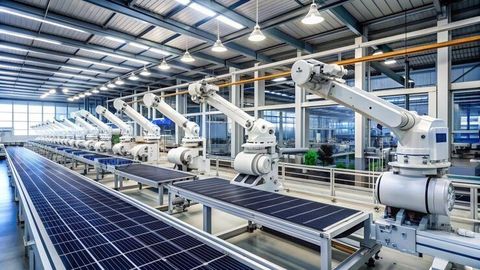
Solar energy: Supports the production of glass used in photovoltaic modules.
Furniture manufacturing: Processes glass tabletops, shelves, mirrors, and decorative panels.
Electronics: Supports specialized glass components that require controlled dimensions and surface quality.
Each sector may require different equipment configurations, inspection methods, and regulatory controls.
Recent Updates and Manufacturing Trends
Smart Factory Integration in 2025–2026
During 2025 and 2026, manufacturers continued exploring connected machinery, industrial data systems, and artificial intelligence (AI) to improve production visibility. In glass processing, these technologies can connect cutting, grinding, handling, and inspection equipment so that production teams can understand performance across the line.
A recent industry discussion published on October 13, 2026, highlighted the importance of reliable industrial networks, integrated production data, and cybersecurity for increasingly automated manufacturing environments.
Key developments include:
AI-assisted inspection: Image analysis can help identify scratches, chips, surface marks, and selected dimensional defects.
Predictive maintenance: Machine data can reveal unusual vibration, temperature changes, or declining equipment performance.
Digital production planning: Software can coordinate cutting patterns, material flow, production schedules, and machine availability.
Connected quality monitoring: Inspection results can be recorded alongside processing parameters to support traceability.
Energy monitoring: Sensors can help track electricity use, compressed air demand, and furnace operating conditions.
These capabilities are not equally common in every factory. Their usefulness depends on equipment compatibility, data quality, staff training, and the reliability of the underlying systems.
Greater Attention to Material Efficiency
Glass breakage and offcuts can increase waste during manufacturing. Digital cutting plans help arrange shapes on glass sheets to improve material utilization. Automated inspection may also identify defects before additional processing takes place.
Manufacturers are increasingly interested in measuring material yield, water use, energy consumption, and rejected products alongside production speed.
Tempering furnaces and glass washing systems also require careful process control. Monitoring heating cycles, cooling conditions, and water circulation can help identify opportunities to improve consistency and resource efficiency.
Flexible Manufacturing for Different Glass Products
Production lines increasingly need to handle varied sizes, thicknesses, and designs. Programmable equipment allows manufacturers to change cutting patterns and processing instructions without redesigning every mechanical operation.
However, flexibility depends on the machine's physical limits. Glass thickness, weight, coating, shape, and processing requirements must remain within the equipment's approved operating range.
Laws, Regulations, and Manufacturing Policies
Machinery Safety Requirements
Automated glass processing equipment must be assessed against the regulations applicable in its country of installation and use. Relevant requirements may cover mechanical guarding, electrical safety, emergency stopping, maintenance, operator training, and workplace risk assessment.
In the United States, the Occupational Safety and Health Administration (OSHA) addresses machinery hazards through standards including 29 CFR 1910.212, which sets general machine-guarding requirements. Employers must protect workers from hazards associated with moving parts and operating areas.
Practical safety measures include:
Installing suitable guards and interlocked access doors.
Using emergency-stop devices where required by the risk assessment.
Isolating electrical, pneumatic, hydraulic, and other hazardous energy before maintenance.
Training operators in safe loading, unloading, and fault recovery.
Maintaining documented inspection and maintenance procedures.
European Union Machinery Rules
The European Union's Machinery Regulation (EU) 2023/1230 establishes requirements concerning machinery safety and conformity. Its general application date is January 20, 2027, although certain provisions apply earlier. Manufacturers and integrators planning equipment for the EU market should review the regulation's applicable requirements and transition arrangements.
Environmental and Energy Regulations
Glass manufacturing can involve substantial heat, electricity, water, and material use. Environmental obligations vary by location and facility. They may cover industrial emissions, wastewater discharge, waste handling, and energy reporting.
For example, a facility operating glass washing equipment may need appropriate wastewater management, while a plant with high-temperature furnaces may be subject to air-emission requirements.
Indian Manufacturing Context
In India, factories must consider applicable central and state rules relating to workplace safety, environmental protection, electrical installations, and industrial operations. The specific obligations depend on the facility, its location, the equipment, and the activities being carried out.
Manufacturers should confirm current requirements with the relevant authorities and qualified compliance professionals rather than assume that one standard covers every glass processing operation.
Tools and Resources for Better Production Control
Digital Design and Cutting Optimization
Computer-aided design (CAD) software helps create glass panel drawings, dimensions, and production layouts. Cutting optimization tools arrange required shapes on available sheets to reduce unnecessary offcuts.
These tools are especially useful for architectural glazing, furniture panels, and production lines handling different panel sizes.
Production Monitoring and Maintenance Tools
Manufacturing execution systems (MES) can track production orders, processing stages, and quality results. Supervisory control and data acquisition (SCADA) systems can display machine conditions and process measurements.
Maintenance teams may also use digital checklists to record inspections, equipment faults, and scheduled maintenance.
Quality Control Resources
Useful quality tools include:
Digital calipers and thickness gauges for dimensional checks.
Optical inspection systems for selected surface defects.
Process-control charts for tracking variation.
Calibration records for measuring instruments.
Defect logs and corrective-action templates.
The appropriate tool depends on the required accuracy and the type of defect being investigated.
Key Performance Indicators
A small set of measurable indicators can help teams evaluate production quality and efficiency.
Indicator | What it measures | Why it matters |
|---|---|---|
First-pass yield | Units passing inspection initially | Shows process consistency |
Material yield | Usable glass relative to input material | Tracks material utilization |
Downtime | Time equipment is unavailable | Highlights reliability problems |
Breakage rate | Glass damaged during processing | Identifies handling or process issues |
Energy per unit | Energy used for a defined output | Supports energy monitoring |
For meaningful comparisons, factories should define each metric consistently and account for differences in glass type, thickness, and product complexity.
Choosing the Right Automation Approach
Before integrating automated glass processing equipment, manufacturers should review production requirements and existing factory conditions.
Important considerations include:
The types and dimensions of glass being processed.
Required cutting accuracy and surface finish.
Compatibility with existing machinery and production software.
Operator training and maintenance capabilities.
Available floor space, energy supply, and material-handling arrangements.
Safety requirements and future production needs.
A phased approach may help manufacturers test individual improvements before connecting an entire production line. Equipment performance should be evaluated using documented quality, safety, and productivity measures.
Frequently Asked Questions
What is an automated glass processing system?
An automated glass processing system uses programmed machinery, sensors, and material-handling equipment to perform operations such as cutting, drilling, grinding, washing, and tempering with controlled precision.
Which industries use automated glass processing machines?
These machines are used in construction, automotive manufacturing, solar panel production, furniture manufacturing, electronics, and other industries that require processed glass components.
How does automation improve glass manufacturing quality?
Automation follows programmed measurements and process settings. Sensors and inspection equipment can identify selected defects, while digital records help manufacturers trace quality issues and maintain consistent production standards.
What safety measures are important for automated glass machinery?
Important measures include machine guarding, safe material handling, appropriate protective equipment, operator training, emergency procedures, and hazardous-energy isolation during maintenance. Requirements vary by location and machine type.
What is the role of AI in glass processing?
AI can support visual defect detection, production-data analysis, and predictive maintenance. Its accuracy depends on the quality of the data, the inspection conditions, and appropriate validation. Human oversight remains important for critical quality decisions.
Conclusion
Automated glass processing systems play an important role in modern manufacturing by combining precision machinery, digital controls, inspection technology, and coordinated material handling. These systems support the production of architectural glass, automotive glazing, furniture components, and specialized industrial products.