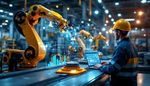
Industrial Wafer Manufacturing Machines Process & Technology
Industrial wafer manufacturing is one of the most important processes in modern electronics. Semiconductor wafers form the foundation of integrated circuits used in computers, smartphones, communication equipment, automotive electronics, medical devices, and industrial automation systems.
A wafer is a thin slice of semiconductor material, most commonly silicon, prepared through highly controlled manufacturing processes. These wafers become the base on which billions of microscopic electronic components are created.
Industrial wafer manufacturing machines exist because semiconductor production requires exceptional precision. Even tiny particles or temperature variations can affect the performance of electronic devices. Specialized equipment helps maintain consistent quality while producing wafers in large quantities.
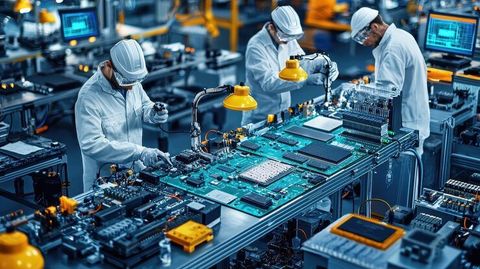
Modern wafer manufacturing combines advanced mechanical engineering, robotics, cleanroom technology, material science, precision measurement, and industrial automation. As electronic devices become smaller and more powerful, manufacturers continue improving wafer processing technology to increase efficiency and product quality.
Today, semiconductor manufacturing has become an essential part of global technological development, supporting industries ranging from healthcare and transportation to renewable energy and artificial intelligence.
Importance
Industrial wafer manufacturing plays a major role in today's digital economy. Nearly every electronic product depends on semiconductor chips that begin with high-quality wafers.
Supporting Modern Electronics
Industrial wafer production enables the manufacturing of:
- Consumer electronics
- Industrial control systems
- Telecommunications equipment
- Electric vehicles
- Medical instruments
- Aerospace electronics
- Renewable energy technologies
Improving Manufacturing Accuracy
Modern wafer manufacturing machines help achieve:
- Extremely smooth wafer surfaces
- High dimensional accuracy
- Better material consistency
- Reduced contamination
- Improved production efficiency
- Stable manufacturing environments
Supporting Industrial Automation
Advanced wafer production systems include:
- Automated handling equipment
- Precision inspection systems
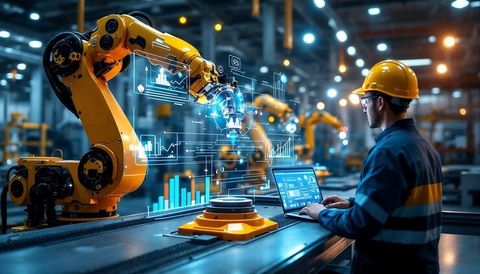
- Robotic transportation
- Process monitoring
- Quality measurement technologies
- Data-driven production management
These technologies improve manufacturing consistency while reducing manual intervention.
Growing Global Demand
Demand for semiconductor wafers continues increasing because of:
- Artificial intelligence applications
- Internet of Things devices
- 5G communication networks
- Electric mobility
- Smart manufacturing
- Data centers
- Advanced medical technologies
As digital transformation expands across industries, wafer manufacturing remains a critical part of global technology infrastructure.
Recent Updates
The semiconductor industry has experienced significant developments during the past year.
| Recent Trend | Industry Development | Impact |
|---|---|---|
| Advanced Process Nodes | Continued progress in smaller semiconductor manufacturing technologies during 2025–2026 | Higher performance and energy efficiency |
| Smart Factory Automation | Increased adoption of AI-assisted production monitoring | Improved production accuracy |
| Cleanroom Improvements | Enhanced contamination control systems | Better wafer quality |
| Sustainable Manufacturing | Greater focus on reducing energy and water consumption | Environmental improvements |
| Automation Expansion | More robotic wafer handling systems | Higher productivity |
| Quality Inspection | Advanced optical inspection technologies | Faster defect detection |
Manufacturers are also investing in predictive maintenance systems that monitor machine performance continuously. These systems help identify equipment conditions before they affect production quality.
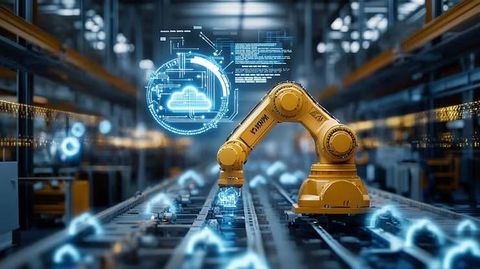
Digital twins and industrial data analytics are becoming increasingly common in wafer manufacturing facilities, allowing engineers to optimize production processes through virtual simulations.
Another noticeable trend is the continued investment in domestic semiconductor manufacturing across several countries to strengthen supply chain resilience and support technological development.
Laws or Policies
Industrial wafer manufacturing operates within various regulatory frameworks depending on the country.
Environmental Regulations
Manufacturing facilities generally follow regulations covering:
- Air emissions
- Water management
- Chemical handling
- Industrial waste management
- Energy efficiency
- Environmental monitoring
These requirements help minimize environmental impact during semiconductor production.
Workplace Safety
Industrial facilities commonly follow occupational safety regulations addressing:
- Chemical safety
- Cleanroom procedures
- Equipment operation
- Emergency preparedness
- Protective equipment
- Employee training
Safety programs help reduce workplace risks while maintaining manufacturing quality.
Quality Standards
Many semiconductor manufacturers implement internationally recognized quality management systems that support:
- Process consistency
- Documentation
- Product traceability
- Continuous improvement
- Risk management
Export and Technology Policies
Many countries maintain regulations related to advanced semiconductor technologies, including:
- Technology transfer requirements
- Export controls
- Intellectual property protection
- Research collaboration policies
These frameworks help regulate the movement of advanced semiconductor technologies while encouraging innovation.
Tools and Resources
Several categories of tools help support industrial wafer manufacturing and process optimization.
Manufacturing Software
Common software functions include:
- Production planning
- Equipment monitoring
- Manufacturing execution
- Process control
- Statistical analysis
Process Simulation Tools
Simulation platforms assist engineers with:
- Process modeling
- Material analysis
- Thermal simulation
- Equipment optimization
- Manufacturing planning
Quality Inspection Systems
Inspection resources often include:
- Optical measurement
- Surface inspection
- Thickness measurement
- Defect analysis
- Dimensional verification
Automation Resources
Industrial automation tools commonly support:
- Robotic wafer handling
- Machine communication
- Sensor integration
- Production scheduling
- Industrial data collection
Learning Resources
Professionals frequently use:
- Engineering publications
- Technical training materials
- Manufacturing process guides
- Semiconductor terminology references
- Industry standards documentation
These educational resources help improve understanding of wafer manufacturing technologies and production methods.
Common Wafer Manufacturing Process
The wafer manufacturing process typically follows several highly controlled stages.
| Manufacturing Stage | Primary Purpose |
|---|---|
| Raw Material Preparation | Preparing semiconductor-grade silicon |
| Crystal Growth | Producing high-purity silicon crystals |
| Ingot Shaping | Forming cylindrical crystal structures |
| Wafer Slicing | Cutting thin semiconductor wafers |
| Edge Profiling | Improving mechanical strength |
| Lapping and Grinding | Achieving thickness consistency |
| Polishing | Creating ultra-smooth surfaces |
| Cleaning | Removing contaminants |
| Inspection | Verifying dimensions and quality |
| Packaging | Preparing wafers for semiconductor fabrication |
Each stage requires precision machinery designed to maintain consistent manufacturing quality throughout production.
Industrial Technologies Used
Modern wafer manufacturing integrates multiple advanced technologies.
Precision Engineering
High-accuracy machining supports consistent wafer dimensions and surface quality.
Robotics
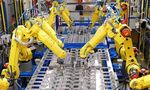
Automated robots safely transport wafers between manufacturing stages while reducing contamination risks.
Artificial Intelligence
AI assists in:
- Equipment monitoring
- Quality prediction
- Process optimization
- Fault detection
- Production analysis
Machine Vision
High-resolution imaging systems inspect wafer surfaces for microscopic defects that may affect semiconductor performance.
Industrial Automation
Automation technologies coordinate production equipment, improve operational efficiency, and maintain manufacturing consistency.
Frequently Asked Questions
What is an industrial wafer?
An industrial wafer is a thin slice of semiconductor material used as the foundation for manufacturing integrated circuits and electronic components.
Why are wafer manufacturing machines highly precise?
Semiconductor devices contain microscopic structures. Even very small production variations can affect device performance, making precision manufacturing essential.
Which industries use semiconductor wafers?
Semiconductor wafers support electronics, automotive manufacturing, healthcare equipment, telecommunications, aerospace, industrial automation, renewable energy, and computing technologies.
Why are cleanrooms important in wafer manufacturing?
Cleanrooms minimize airborne particles, helping maintain the extremely clean conditions required for semiconductor production and improving manufacturing quality.
How is automation improving wafer manufacturing?
Automation improves production consistency, supports continuous monitoring, reduces handling errors, enhances quality inspection, and increases manufacturing efficiency.
Conclusion
Industrial wafer manufacturing is a highly specialized field that supports the production of nearly every modern electronic device. Through precision engineering, cleanroom environments, robotics, automation, and advanced process control, manufacturers produce semiconductor wafers capable of supporting increasingly sophisticated technologies.