Plastic Granulators Recycling Process: Guide to Efficient Plastic Waste Management
Plastic waste comes from packaging, manufacturing, consumer products, automotive components, electrical equipment, construction materials, and many other applications. Because plastics can remain in the environment for long periods, effective waste management requires methods that can recover useful material while reducing unnecessary disposal.
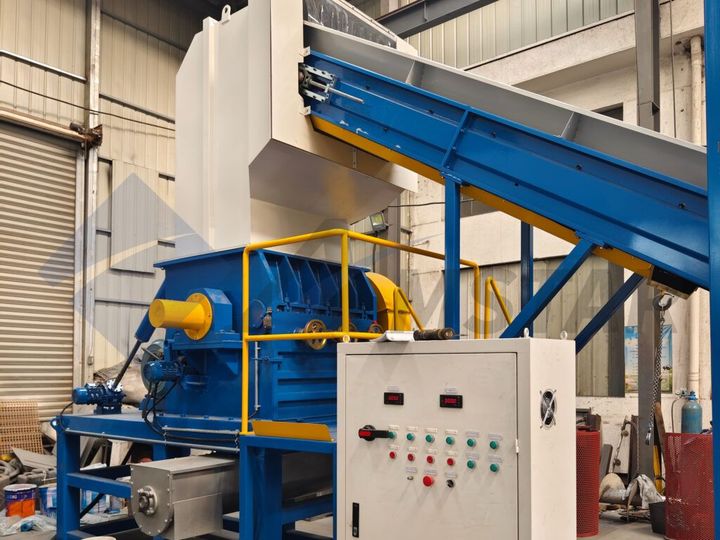
A plastic granulator is a size-reduction machine used in mechanical recycling. It cuts plastic waste into smaller, more manageable pieces called flakes or regrind. These materials can then move through additional stages such as washing, drying, sorting, separation, extrusion, and pelletizing.
The basic plastic granulation process generally includes:
- Collection of plastic waste
- Preliminary sorting
- Removal of unwanted materials
- Feeding plastic into the granulator
- Cutting or shredding into smaller pieces
- Screening to control particle size
- Washing and drying when required
- Further separation and quality inspection
- Processing into recycled material
Plastic granulators are used for different materials, including polyethylene (PE), polypropylene (PP), polyethylene terephthalate (PET), polystyrene (PS), and certain engineering plastics. The appropriate equipment and process depend on the material type, contamination level, shape, thickness, and intended application.
Unlike a complete recycling plant, a granulator primarily performs size reduction. It is one part of a broader plastic recycling system.
Why Plastic Granulators Matter in Modern Waste Management
Plastic waste management has become increasingly important as governments, manufacturers, recyclers, and communities look for ways to increase material recovery and reduce environmental impacts.
Granulation helps make plastic waste easier to handle. Large components, production scrap, rejected molded parts, containers, and other plastic items can be reduced to a more uniform size before subsequent processing.
Several areas benefit from effective granulation.
Manufacturing waste reduction
Plastic processing facilities can generate runners, sprues, rejected components, trimming waste, and other production scrap. Granulation can prepare suitable production waste for controlled recovery and reprocessing.
Improved material handling
Large plastic items are difficult to transport, sort, wash, and process. Smaller flakes can move more consistently through downstream equipment.
Better recycling preparation
Granulation creates a feedstock that can undergo additional separation, washing, drying, extrusion, or pelletizing. Consistent particle size can also make downstream processing easier to control.
Support for circular material use
When suitable plastic waste is properly collected and processed, recovered material can become feedstock for new products. This supports the broader concept of a circular economy, where materials remain in productive use for longer.
Quality management
Granulator design affects particle size, heat generation, contamination, and material degradation. Appropriate operating conditions are therefore important for maintaining the quality of recovered plastic.
Common factors considered when selecting or operating a granulator include:
- Plastic polymer type
- Material thickness
- Feed size
- Required flake size
- Moisture level
- Contamination
- Throughput requirements
- Knife configuration
- Screen opening
- Energy consumption
- Maintenance requirements
- Worker safety
Recent Developments in Plastic Recycling
Plastic recycling has continued to evolve during 2025 and 2026, with greater attention on traceability, recycled content, flexible packaging, mechanical recycling efficiency, and extended producer responsibility.
One important development has been stronger regulatory attention toward packaging waste. In India, the Plastic Waste Management (Amendment) Rules, 2024 were notified on March 14, 2024. The changes strengthened digital reporting and extended producer responsibility mechanisms while expanding responsibilities across parts of the plastic supply chain.
The Indian regulatory framework has also placed greater emphasis on recycling targets and documented plastic waste processing. For example, CPCB documentation describes progressively increasing minimum recycling requirements for certain plastic packaging categories, with higher requirements applying from 2026–27 onward.
In 2025–2026, the industry has also seen growing attention toward difficult-to-recycle flexible plastics. International policy discussions increasingly focus on recyclability, recycled content, collection infrastructure, and verification of recycled materials. Mechanical recycling remains important, while chemical and advanced recycling technologies continue to receive attention for waste streams that are challenging to process mechanically.
Another developing area is the use of digital systems to improve waste tracking. Digital documentation can help regulators and organizations monitor quantities collected, processed, recycled, and transferred within formal recycling systems.
For granulation operations, these developments increase the importance of accurate material identification, contamination control, process records, and traceability.
Laws and Policies Affecting Plastic Recycling in India
India has established the Plastic Waste Management Rules, 2016, together with subsequent amendments, as a major regulatory framework for plastic waste.
The framework covers areas such as plastic waste collection, segregation, processing, recycling, producer responsibility, and environmentally sound management. Several amendments have been introduced since the original rules.
The 2024 amendment is particularly relevant because it strengthened electronic reporting and monitoring mechanisms. The government has also expanded responsibilities connected with extended producer responsibility (EPR) for plastic packaging.
Plastic waste processors operating within regulated systems may therefore need to consider:
- Applicable registration requirements
- EPR-related documentation
- Waste processing records
- Material traceability
- Environmental compliance
- Pollution-control requirements
- Safe handling and storage
- Reporting obligations
- Applicable state-level environmental requirements
CPCB documentation also describes recycling obligations for different packaging categories and requirements for handling material that cannot be conventionally recycled.
Regulations can change, and requirements may differ according to the type of operation, location, polymer, waste stream, and activity being performed. Organizations should therefore verify current requirements with the relevant central and state environmental authorities before making compliance decisions.
Tools and Resources for Plastic Granulation and Recycling
Several practical tools can support plastic waste management and granulation planning.
Material identification guides
Polymer identification charts can help distinguish common plastics such as PET, HDPE, PVC, LDPE, PP, and PS. Correct identification is important because mixed polymers may have different processing requirements.
Particle-size screening charts
Screen and particle-size references can help operators understand the relationship between screen openings and the approximate dimensions of granulated material.
Throughput calculators
Basic throughput calculations can estimate how much material may be processed over a defined operating period. Actual performance depends on the plastic type, feed characteristics, machine configuration, and operating conditions.
Energy monitoring tools
Energy meters and production monitoring systems can compare electricity consumption with material throughput, helping organizations evaluate process efficiency.
Maintenance checklists
Routine checklists can cover:
- Knife condition
- Screen condition
- Bearings
- Rotor inspection
- Fasteners
- Electrical systems
- Dust accumulation
- Safety guards
- Emergency stops
Waste classification templates
Simple templates can record polymer type, source, contamination, moisture, quantity, processing stage, and destination. Consistent records can improve material traceability.
Environmental compliance resources
Government environmental portals, regulatory databases, technical standards, and official waste-management guidance can help organizations understand applicable requirements.
Frequently Asked Questions About Plastic Granulators
What does a plastic granulator do?
A plastic granulator reduces plastic waste into smaller pieces, commonly called flakes or regrind. These pieces can then undergo washing, separation, drying, extrusion, or other recycling processes.
What types of plastic can be granulated?
Many thermoplastics can be granulated, including PET, PE, PP, PS, and several engineering plastics. The machine configuration should match the physical and processing characteristics of the material.
Is granulation the same as plastic recycling?
No. Granulation is normally one stage within mechanical recycling. Recycling may also involve collection, sorting, washing, drying, separation, extrusion, filtration, and pelletizing.
Why is particle size important?
Particle size affects feeding, washing, separation, drying, storage, and downstream processing. A suitable and relatively consistent size can improve process control.
What should be considered when choosing a plastic granulator?
Important considerations include polymer type, feed dimensions, contamination, required particle size, throughput, knife configuration, screen size, maintenance requirements, energy consumption, and safety features.
Conclusion
Plastic granulators play an important role in modern plastic waste management by converting larger plastic waste and production scrap into smaller, more manageable material. Although granulation alone does not constitute complete recycling, it provides an important preparation stage for subsequent material recovery.