Automated Guided Vehicles (AGVs) Explained: Systems, Components & Industrial Automation
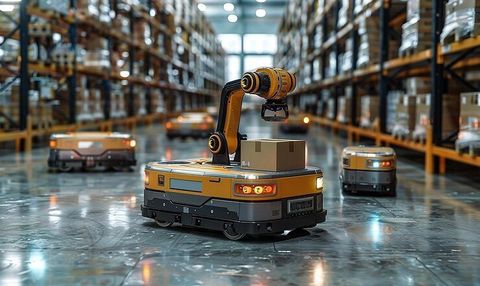
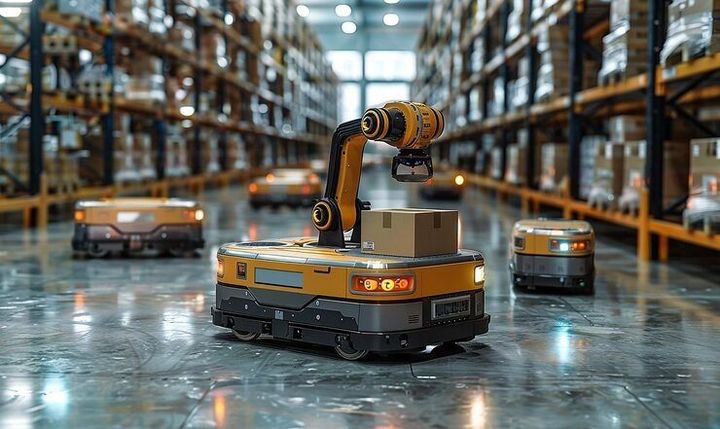
Automated Guided Vehicles (AGVs) are mobile machines designed to transport materials automatically within factories, warehouses, production facilities, and logistics centers. Unlike traditional manually operated vehicles, AGVs move along predefined routes or navigate using advanced guidance technologies without continuous human control.
Industrial automation has become increasingly important as manufacturers seek greater efficiency, consistency, and workplace safety. Material transportation is a critical part of every production process, and AGVs help automate this task by moving raw materials, finished products, pallets, containers, and equipment between different locations.
Modern AGVs are equipped with sensors, navigation systems, communication technologies, controllers, batteries, and safety features that allow them to perform repetitive transportation tasks with high accuracy. Their development supports the growing adoption of smart factories, digital manufacturing, and connected industrial environments.
As industries continue to embrace automation, AGVs have become an essential component of modern production systems by reducing manual movement while improving operational coordination.
Why Automated Guided Vehicles Matter Today
Many industries operate around the clock and require reliable movement of materials between production stages. Manual transportation can create delays, inconsistencies, and unnecessary handling. AGVs help address these challenges through automated and controlled material flow.
Industries benefiting from AGVs include:
- Manufacturing plants
- Automotive production
- Food processing
- Pharmaceutical manufacturing
- Electronics assembly
- Distribution centers
- Warehousing
- Packaging facilities
- Airport logistics
- Healthcare facilities
Problems AGVs Help Address
AGVs contribute to industrial efficiency by helping organizations manage several operational challenges, including:
| Challenge | How AGVs Help |
|---|---|
| Material movement delays | Provide continuous transportation |
| Human handling errors | Improve consistency |
| Warehouse congestion | Follow optimized routes |
| Inventory movement | Support automated tracking |
| Production interruptions | Maintain scheduled delivery of materials |
| Workplace safety | Reduce unnecessary vehicle interactions |
Major Components of an AGV System
An Automated Guided Vehicle typically consists of several integrated components.
| Component | Purpose |
|---|---|
| Navigation System | Determines travel path |
| Electric Drive Motors | Move the vehicle |
| Battery System | Supplies power |
| Safety Sensors | Detect obstacles |
| Controller | Processes operational commands |
| Communication Module | Connects with factory systems |
| Load Handling Equipment | Carries pallets or materials |
| Emergency Stop System | Enhances operational safety |
Common Types of AGVs
Different industrial applications require different AGV designs.
- Tow AGVs
- Unit Load AGVs
- Pallet Transport AGVs
- Forklift AGVs
- Assembly Line AGVs
- Heavy Load AGVs
- Hybrid Navigation AGVs
Each type supports different manufacturing and logistics requirements depending on payload, route complexity, and production layout.
Navigation Technologies
Modern AGVs use multiple navigation methods, including:
- Magnetic guidance
- Laser navigation
- Vision guidance
- Natural feature navigation
- QR code navigation
- RFID guidance
- Inertial navigation
- Simultaneous Localization and Mapping (SLAM)
These technologies allow AGVs to operate efficiently in various industrial environments.
Recent Updates
Recent Developments in AGV Technology
Industrial automation has evolved rapidly throughout 2025 and 2026, with AGV technology becoming more intelligent and adaptable.
Several notable trends include:
- Greater integration with Industrial Internet of Things (IIoT) platforms for real-time monitoring.
- Expanded use of Artificial Intelligence to improve route planning and traffic management.
- Increased deployment of collaborative AGVs that safely operate alongside workers.
- Improved lithium battery technology supporting longer operational cycles.
- Faster wireless communication through advanced industrial networking.
- Enhanced predictive maintenance using machine learning and equipment monitoring.
- Growing adoption of digital twins for AGV fleet simulation and optimization.
- Improved cybersecurity practices protecting industrial automation systems.
Manufacturers are also integrating AGVs with warehouse management systems, manufacturing execution systems, and enterprise resource planning platforms to improve coordination across production facilities.
Another growing trend is flexible manufacturing, where AGVs support changing production layouts without requiring extensive infrastructure modifications.
Laws or Policies
Regulations Affecting Automated Guided Vehicles
Although AGV regulations differ between countries, industrial facilities generally follow machinery safety, workplace safety, electrical safety, and automation standards.
Common regulatory areas include:
- Machine safety requirements
- Functional safety standards
- Electrical equipment safety
- Occupational health and workplace safety
- Industrial cybersecurity guidance
- Battery safety regulations
- Risk assessment procedures
- Emergency shutdown requirements
Organizations typically conduct safety assessments before implementing AGVs within production environments.
In many countries, government initiatives encouraging digital manufacturing, smart factories, and Industry 4.0 have supported increased adoption of industrial automation technologies. These programs often emphasize productivity improvements, energy efficiency, worker safety, and advanced manufacturing innovation.
Companies also establish internal operating procedures covering:
- Traffic management
- Pedestrian interaction
- Emergency response
- Preventive maintenance
- Operator awareness
- Inspection schedules
Following these frameworks helps maintain safe and reliable AGV operations.
Tools and Resources
Helpful Resources for Learning About AGVs
Many educational resources support engineers, students, manufacturers, and automation professionals interested in Automated Guided Vehicles.
Useful learning resources include:
- Industrial automation learning platforms
- Manufacturing technology publications
- Engineering design templates
- Warehouse layout planning software
- Fleet management dashboards
- Material flow simulation software
- Industrial safety checklists
- Productivity calculation worksheets
- Preventive maintenance templates
- Robotics learning courses
- Digital manufacturing guides
- Industrial automation calculators
- Engineering reference manuals
Common Software Functions
Modern AGV environments often include software capable of:
- Route optimization
- Traffic management
- Battery monitoring
- Fleet scheduling
- Asset tracking
- Performance reporting
- Predictive maintenance analysis
- Equipment diagnostics
- Inventory movement monitoring
These digital resources improve operational visibility while supporting informed decision-making.
Benefits of Automated Guided Vehicles
Organizations implementing AGVs often experience several operational improvements.
- Improved production efficiency
- Consistent material transportation
- Better inventory visibility
- Reduced production bottlenecks
- Enhanced workplace safety
- Improved operational accuracy
- Flexible manufacturing support
- Better space utilization
- Continuous operation capability
- Reduced repetitive manual handling
These advantages make AGVs valuable components within modern industrial automation systems.
Applications Across Industries
AGVs are used across numerous sectors where efficient material movement is essential.
| Industry | Typical Application |
|---|---|
| Automotive | Assembly line transport |
| Warehousing | Pallet movement |
| Pharmaceuticals | Controlled material handling |
| Food Processing | Production logistics |
| Electronics | Component delivery |
| Airports | Cargo transportation |
| Hospitals | Internal supply movement |
| Heavy Manufacturing | Equipment transportation |
The flexibility of AGVs allows them to support both small production facilities and large industrial complexes.
Future Outlook
Automation continues to evolve alongside Artificial Intelligence, Industrial IoT, cloud computing, robotics, and smart manufacturing.
Future AGV developments are expected to focus on:
- More autonomous navigation
- Improved obstacle recognition
- Enhanced fleet coordination
- Greater energy efficiency
- Smarter predictive maintenance
- Improved human-machine collaboration
- Faster industrial communication
- Expanded digital integration
- Advanced cybersecurity capabilities
As manufacturing environments become increasingly connected, AGVs are expected to play a larger role in intelligent material handling and factory automation.
FAQs
What is an Automated Guided Vehicle?
An Automated Guided Vehicle is a self-operating industrial vehicle designed to transport materials automatically within manufacturing facilities, warehouses, and logistics environments using navigation technologies and onboard control systems.
How do AGVs navigate inside factories?
AGVs navigate using technologies such as laser guidance, magnetic paths, cameras, RFID, natural feature navigation, inertial systems, or SLAM-based mapping depending on operational requirements.
Which industries commonly use AGVs?
Automotive manufacturing, electronics, pharmaceuticals, food processing, logistics, warehousing, airports, hospitals, and heavy manufacturing are among the most common users of AGV technology.
Are AGVs part of Industry 4.0?
Yes. AGVs are considered an important component of Industry 4.0 because they support connected manufacturing, intelligent automation, digital factories, and real-time material movement.
What is the difference between an AGV and an AMR?
AGVs generally follow predefined routes or guidance systems, while Autonomous Mobile Robots (AMRs) use advanced sensors and dynamic navigation to make independent path decisions in changing environments.
Conclusion
Automated Guided Vehicles have become an important part of modern industrial automation by improving material transportation, operational efficiency, workplace safety, and production consistency. Their combination of intelligent navigation, communication systems, sensors, and digital integration enables industries to support increasingly complex manufacturing and logistics operations.