Industrial Machinery and Equipment: Insights into Manufacturing Innovation
Industrial machinery supports how modern industries produce goods. It includes equipment, machines, and mechanical systems used in manufacturing, processing, assembly, packaging, and material handling. From small production workshops to large industrial facilities, these machines help businesses perform essential operations with greater consistency.
Industrial equipment has developed significantly alongside engineering, computing, and manufacturing technology. Traditional mechanical systems now work alongside digital controls, automated processes, and advanced monitoring tools. These developments are changing how machinery manufacturers design equipment and how industrial facilities manage production activities.
What Is Industrial Equipment?
Industrial equipment refers to machines and supporting systems designed for industrial operations. Depending on the application, equipment may perform cutting, shaping, welding, drilling, lifting, mixing, or inspection tasks.
Common examples include:
CNC machines used for accurate cutting and machining.
Industrial robots designed for repetitive manufacturing operations.
Conveyors and material-handling systems used to move products.
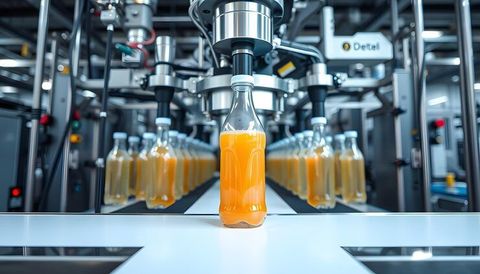
Packaging machines that prepare goods for distribution.
Industrial pumps and compressors used in processing facilities.
Inspection equipment that checks product dimensions and quality.
Each category serves a different purpose. Selecting appropriate machinery depends on production requirements, material characteristics, workplace conditions, and operational capacity.
Why Industrial Machinery Matters Today
Industrial machinery plays an important role in manufacturing, construction, transportation, energy, agriculture, and many other sectors. It helps organizations complete complex production activities while maintaining consistent operating procedures.
Modern production environments often require accurate measurements, repeatable processes, and coordinated equipment. Properly selected industrial equipment can help reduce unnecessary manual work, improve workflow organization, and support better resource management.
Supporting Manufacturing Productivity
Manufacturing involves multiple connected activities, including preparing raw materials, processing components, assembling products, and inspecting finished goods. Machinery helps coordinate these activities through structured production processes.
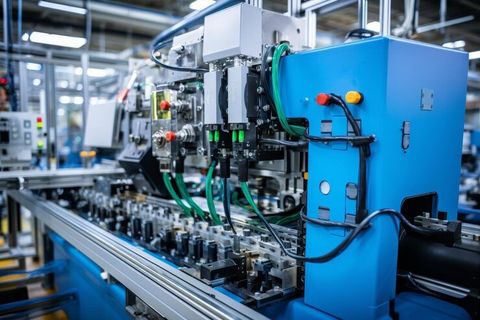
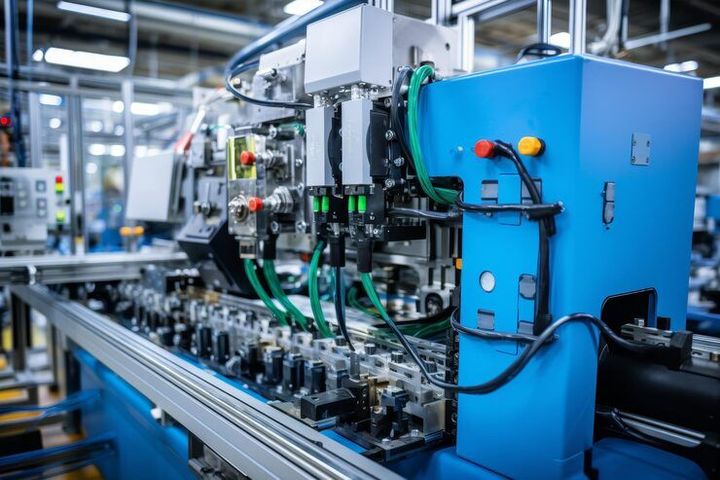
For example, an automated production line can move materials between different workstations. Machines can perform repeated operations according to programmed instructions, while operators supervise the process and respond to equipment conditions.
Improving Accuracy and Consistency
Precision is important in industries that manufacture components with specific dimensions and tolerances. An innovative CNC machine uses computer-controlled instructions to guide cutting, drilling, milling, and other machining operations.
These systems can repeat programmed movements with considerable consistency when correctly configured and maintained. They are commonly used in automotive manufacturing, aerospace engineering, electronics production, and metalworking.
Supporting Workplace Organization
Industrial machinery can also help organize difficult or repetitive tasks. Lifting equipment, robotic systems, and automated conveyors can reduce the need for workers to manually handle certain materials.
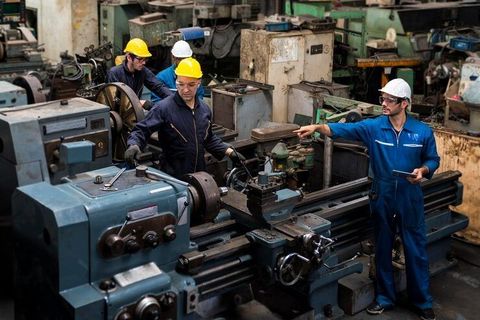
However, automation does not remove the need for trained personnel. Operators, maintenance technicians, and production supervisors remain important for monitoring machinery and maintaining safe working conditions.
Manufacturing Innovation and Emerging Technologies
Technology is changing the design, operation, and maintenance of industrial machinery. Manufacturers increasingly combine mechanical engineering with software, sensors, connectivity, and data analysis.
These developments support more connected production environments, where equipment can communicate operating information and help production teams understand machine performance.
Computer Numerical Control Technology
Computer Numerical Control, commonly known as CNC, is an important development in modern manufacturing. CNC equipment follows digital instructions to control machine movements and perform specific operations.
Different CNC systems support different production requirements:
CNC milling machines remove material using rotating cutting tools.
CNC lathes rotate workpieces during machining operations.
CNC laser machines use focused laser energy for cutting.
CNC plasma machines cut electrically conductive materials.
CNC routers process materials such as wood, plastics, and composites.
The appropriate system depends on material type, component design, production volume, and required precision.
Industrial Automation and Robotics
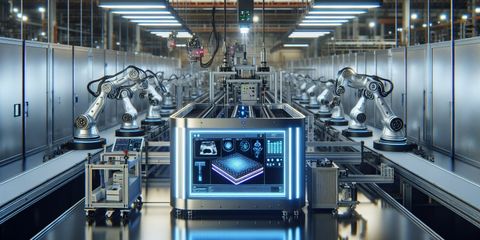
Automation combines machines, sensors, controllers, and software to perform manufacturing activities with limited manual intervention. Industrial robots are frequently used for welding, painting, material handling, assembly, and repetitive positioning tasks.
Robotic equipment can operate within carefully defined working areas and follow programmed movements. Human supervision remains necessary for programming, maintenance, safety checks, and process improvements.
Artificial Intelligence and Smart Manufacturing
Artificial intelligence is becoming increasingly relevant to industrial operations. AI-supported systems can analyze machine data, identify unusual operating patterns, and support production planning.
Predictive maintenance is one important application. Instead of relying entirely on fixed maintenance schedules, monitoring systems can help identify possible equipment problems through temperature, vibration, pressure, and operating data.
These tools support maintenance decisions, although their accuracy depends on suitable sensors, reliable information, and appropriate system configuration.
Important Industrial Equipment Categories
Different industries require different machinery depending on their products, materials, and manufacturing methods.
The following table presents common equipment categories and their general applications.
| Equipment category | Main application | Common industry |
|---|---|---|
| CNC machinery | Precision machining | Automotive and aerospace |
| Packaging equipment | Product packaging | Food and pharmaceuticals |
| Industrial robots | Automated operations | Electronics and automotive |
| Material handling | Moving industrial materials | Warehousing and logistics |
| Welding machinery | Joining metal components | Construction and fabrication |
| Inspection systems | Product quality checks | Electronics and engineering |
| Pumps and compressors | Fluid and gas movement | Energy and processing |
Understanding these categories helps businesses and learners identify how machinery contributes to different production environments.
Factors to Consider When Selecting Industrial Equipment
Choosing appropriate machinery involves evaluating technical requirements and long-term operational needs. Industrial equipment suppliers and machinery manufacturers generally work with different machine specifications, applications, and operating conditions.
Production Requirements
The first consideration is the intended manufacturing activity. Equipment should match the materials being processed, required output, product dimensions, and production methods.
Technical Specifications
Machine specifications provide information about operating capacity, power requirements, working dimensions, accuracy, and supported materials. Comparing these details helps identify whether particular equipment matches the intended application.
Maintenance and Reliability
Industrial machinery requires regular inspection and maintenance. Important activities include lubrication, component replacement, cleaning, calibration, and checking electrical and mechanical systems.
A planned maintenance approach can help identify developing problems before they interrupt production.
Operator Training and Safety
Workers need suitable training before operating industrial machinery. Safety procedures should cover machine controls, protective equipment, emergency stops, restricted areas, and maintenance precautions.
Applicable workplace regulations and manufacturer instructions should guide equipment operation.
Recent Developments in Industrial Manufacturing
During 2025 and 2026, manufacturing innovation continued to focus on automation, connected machinery, energy efficiency, and data-supported production management.
One important development is the wider use of industrial Internet of Things technology. Connected sensors allow equipment to collect operating information that can be reviewed through monitoring systems.
Another development is the growing use of digital twins. These are virtual representations of physical equipment or production processes that can help engineers examine operating conditions and evaluate possible changes.
Manufacturers are also exploring more energy-conscious machine designs, improved electric drives, and production systems that reduce unnecessary material waste.
These developments do not affect every industry equally. Adoption depends on investment capacity, technical skills, existing infrastructure, and the practical requirements of each manufacturing environment.
Laws, Standards, and Industrial Safety
Industrial machinery must be designed, installed, and operated with appropriate attention to workplace safety and applicable regulations.
International standards, including ISO 12100, provide guidance on machinery safety and risk assessment. Other standards address electrical equipment, machine guarding, emergency controls, and specific industrial applications.
In India, the Occupational Safety, Health and Working Conditions Code, 2020, forms part of the country's workplace safety and employment framework. Applicable requirements depend on implementation, relevant rules, and the type of industrial establishment.
Businesses should consider:
Machine guarding and emergency stopping arrangements.
Electrical safety and equipment grounding.
Operator training and documented procedures.
Regular inspection and maintenance records.
Appropriate handling and storage of industrial materials.
Understanding applicable regulations helps organizations establish safer manufacturing environments.
Frequently Asked Questions
What Is Industrial Equipment Used For?
Industrial equipment is used for manufacturing, processing, cutting, assembly, packaging, material handling, and inspection across different industries.
What Is an Innovative CNC Machine?
An innovative CNC machine uses computer-controlled instructions and modern machining technology to perform operations such as milling, drilling, turning, and cutting.
How Do Machinery Manufacturers Support Innovation?
Machinery manufacturers develop equipment by combining mechanical engineering, digital controls, automation, sensors, and improved production methods.
What Should Businesses Consider When Choosing Industrial Equipment Suppliers?
Important considerations include technical specifications, equipment suitability, maintenance requirements, safety documentation, operating capacity, and technical support arrangements.
What Is the Future of Industrial Machinery?
Future developments are likely to involve greater automation, connected equipment, artificial intelligence, predictive maintenance, and energy-efficient manufacturing systems.
Conclusion
Industrial machinery and equipment remain essential to modern manufacturing and industrial development. CNC technology, robotics, automation, and connected monitoring systems are changing how production activities are organized and managed.