Industrial Process Pumps Guide: Selection, Performance and Maintenance
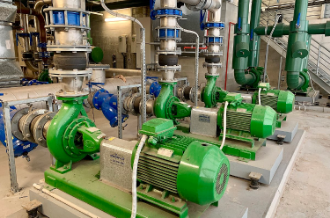
Industrial process pumps are mechanical systems designed to move liquids through industrial processes. They are used in applications where fluids must be transferred, circulated, pressurized, or handled between different stages of production.
These pumps are found across many industries, including chemical processing, water treatment, food production, pharmaceuticals, power generation, mining, oil and gas, and general manufacturing. The exact pump design depends on the fluid, pressure, flow rate, temperature, and operating environment.
The two broad categories are centrifugal pumps and positive displacement pumps. Centrifugal pumps use rotating impellers to increase fluid velocity and pressure. Positive displacement pumps move a defined volume of fluid during each operating cycle.
Choosing an appropriate industrial process pump involves more than looking at flow capacity. Engineers generally consider:
- Required flow rate
- Discharge pressure
- Fluid properties
- Operating temperature
- Viscosity
- Material compatibility
- Pump efficiency
- Installation conditions
- Maintenance requirements
- Safety considerations
Understanding these factors helps users match pump characteristics with the actual process.
Importance
Industrial process pumps play an important role in maintaining continuous fluid movement. A poorly matched pump can create operational problems such as inadequate flow, excessive vibration, overheating, seal damage, or unnecessary energy consumption.
Pump selection also affects the wider process. For example, a chemical plant may need materials that tolerate corrosive liquids, while a food-processing application may require equipment designed around hygiene and cleanability requirements.
Energy and Performance
Pumping systems can represent a significant portion of energy use in some industrial facilities. Efficiency therefore depends not only on the pump itself but also on the complete system.
Important factors include:
- Pipe diameter and length
- Pressure losses
- Valve configuration
- Operating point
- Motor efficiency
- Pump speed
- Impeller configuration
- System demand
A pump operating far from its intended operating range can experience greater mechanical stress and reduced performance. System-level evaluation is therefore important when assessing industrial pump efficiency.
Selecting the Right Pump
A practical pump selection process begins with understanding the application.
For low-viscosity liquids and many general circulation applications, centrifugal pumps are commonly considered. Positive displacement designs can be appropriate where controlled flow, higher viscosity, or specific pressure characteristics are required.
Fluid characteristics are particularly important. Corrosive, abrasive, volatile, or temperature-sensitive fluids may require specialized construction materials and sealing arrangements.
Recent Updates and Industry Trends
Industrial pump technology has increasingly focused on energy efficiency, monitoring, reliability, and predictive maintenance during 2025 and 2026.
Smart Pump Monitoring
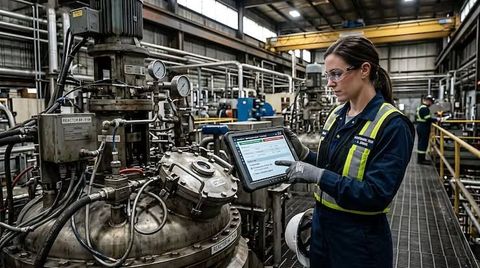
Sensors can monitor variables such as vibration, temperature, pressure, speed, and operating conditions. This information can help maintenance teams identify unusual behavior before it develops into a larger equipment problem.
Digital monitoring is particularly useful in facilities with many pumps because it provides a clearer view of equipment condition and operating patterns.
Variable-Speed Operation
Variable-frequency drives allow pump speed to change according to process demand. Instead of operating continuously at one speed, the system can adjust output when requirements change.
This approach can reduce unnecessary energy use in suitable applications, although the overall result depends on system design and operating conditions.
Predictive Maintenance
Condition-based maintenance has become more important as industrial facilities collect more equipment data. Instead of relying exclusively on fixed maintenance intervals, operators can combine inspection findings with vibration, temperature, pressure, and performance data.
This can support earlier investigation of:
- Bearing wear
- Shaft imbalance
- Cavitation
- Seal problems
- Misalignment
- Abnormal vibration
More Efficient System Design
Recent engineering practice increasingly considers the entire pumping system rather than evaluating the pump alone. Hydraulic calculations, system curves, control methods, and pipe design can all influence performance.
Digital simulation and pump-system modeling are also becoming more accessible for engineering studies and equipment planning.
Laws or Policies
Industrial process pumps are affected by several types of regulations and technical requirements. The exact rules depend on the country, industry, fluid, and installation environment.
In India, industrial facilities may need to consider environmental regulations, workplace safety requirements, electrical rules, pressure-related requirements, and sector-specific standards. Facilities handling hazardous chemicals may face additional requirements concerning storage, transfer, containment, and emergency procedures.
Pump installations can also involve standards covering rotating equipment, pressure systems, electrical equipment, noise, emissions, and occupational safety.
For international projects, engineers may refer to recognized technical frameworks for pump construction, testing, performance, and installation. Requirements can differ depending on whether the equipment is used in water treatment, chemical processing, petroleum operations, food processing, or another sector.
Organizations should verify the latest applicable requirements before designing or modifying an industrial pumping system because regulations and technical standards can change.
Tools and Resources
Several general tools can help with industrial pump analysis and planning.
Pump Selection Calculators
Pump calculators can estimate basic hydraulic requirements using parameters such as flow rate, head, fluid density, and efficiency.
Hydraulic Calculation Tools
Hydraulic analysis tools can help estimate pressure losses through pipes, fittings, valves, and other components.
System Curves
A system curve shows how required head changes as flow increases. Comparing the system curve with the pump performance curve helps identify an appropriate operating point.
Maintenance Templates
Digital or spreadsheet-based maintenance templates can track:
- Inspection dates
- Vibration readings
- Bearing condition
- Seal inspections
- Lubrication records
- Temperature readings
- Pressure measurements
- Corrective actions
Technical Learning Resources
Engineering handbooks, technical standards, equipment manuals, pump performance charts, fluid-property references, and training materials can help users understand pump selection and operation.
Key Factors in Pump Performance
| Factor | Why It Matters |
|---|---|
| Flow rate | Determines how much liquid must move through the system |
| Head | Indicates the pressure or elevation requirement |
| Fluid viscosity | Influences pump behavior and energy requirements |
| Temperature | Affects fluid properties and material selection |
| Corrosion | Influences construction and material requirements |
| Cavitation risk | Can cause vibration and equipment damage |
| Efficiency | Helps evaluate energy performance |
| Maintenance | Influences reliability and operating continuity |
Understanding Cavitation
Cavitation occurs when local fluid pressure falls sufficiently for vapor bubbles to form and then collapse. This can produce noise, vibration, surface damage, and unstable pump operation.
Proper suction conditions, appropriate system design, and adequate available net positive suction head are important considerations when reducing cavitation risk.
Maintenance Practices
Regular maintenance helps maintain predictable pump performance. Maintenance requirements vary according to pump type and application, but common checks include:
- Inspecting for unusual vibration
- Checking operating temperature
- Monitoring pressure and flow
- Inspecting seals and connections
- Checking alignment
- Reviewing lubrication requirements
- Examining bearings
- Recording operating data
- Investigating unusual noise
Maintenance records are useful because they allow changes in equipment behavior to be identified over time.
FAQs
What are industrial process pumps used for?
Industrial process pumps are used to transfer, circulate, pressurize, or control the movement of liquids within industrial systems. Applications vary according to the industry and process requirements.
What is the difference between a centrifugal pump and a positive displacement pump?
A centrifugal pump uses rotating motion to transfer energy to a fluid, while a positive displacement pump moves a defined volume during each operating cycle. Their suitability depends on flow, pressure, viscosity, and application requirements.
How can pump efficiency be improved?
Efficiency can be influenced by correct pump sizing, appropriate operating conditions, efficient motors, suitable control methods, proper pipe design, and regular maintenance. The complete system should be evaluated rather than focusing only on the pump.
What causes industrial pump vibration?
Common causes can include misalignment, imbalance, bearing problems, cavitation, mechanical looseness, or operation outside the intended range. Vibration should be investigated using appropriate inspection and monitoring methods.
How often should industrial process pumps be maintained?
There is no single maintenance interval for every pump. The appropriate schedule depends on pump design, operating conditions, fluid characteristics, manufacturer guidance, duty cycle, and equipment history.
Conclusion
Industrial process pumps are essential components of many fluid-handling systems. Their performance influences production continuity, energy use, equipment reliability, and process stability.Effective pump selection starts with understanding flow, pressure, fluid characteristics, temperature, materials, and system requirements. Modern monitoring technologies are also making it easier to track equipment condition and identify unusual operating patterns.