Capsule Making Machine Guide: Automation, Production Process & Quality Considerations
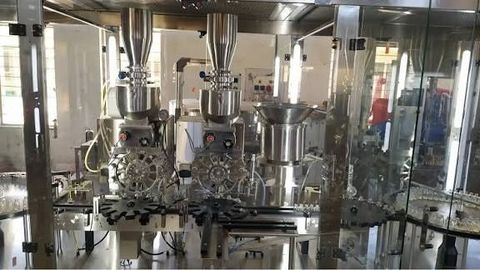
Capsule making machines are specialized pharmaceutical production systems used to manufacture and process hard or soft capsule dosage forms. Depending on the capsule type, equipment may perform operations such as shell formation, filling, joining, polishing, inspection, and handling.
Capsules are widely used because they can contain powders, granules, pellets, or other suitable formulations and can provide a convenient dosage format. Producing them consistently requires controlled machinery, suitable materials, accurate dosing systems, and well-managed manufacturing conditions.
A capsule production line can range from semi-automatic equipment to highly automated systems. Modern pharmaceutical manufacturing increasingly uses automation to reduce manual intervention, improve process consistency, and support data recording.
For hard capsules, the manufacturing process generally involves preparing empty capsule shells, separating the capsule body and cap, filling the body with the required formulation, and securely joining the two parts. Additional equipment may then inspect and polish the finished capsules.
The machine itself is only one part of the production system. The surrounding environment, raw materials, formulation properties, equipment maintenance, cleaning procedures, and quality controls all influence the final product.
Why Capsule Manufacturing Matters Today
Capsule manufacturing is important because pharmaceutical products require consistent dosage, reliable quality, and controlled production conditions. Small variations in filling or capsule dimensions can affect the uniformity of the finished dosage form.
Automation helps address several manufacturing challenges. These include variation caused by manual handling, inaccurate filling, contamination risks, production interruptions, and difficulties in maintaining consistent operating conditions.
Modern capsule manufacturing equipment can integrate several operations into a coordinated production sequence. Depending on the machine configuration, sensors and control systems can monitor operating conditions and identify certain process abnormalities.
Important advantages of automation include:
- More consistent capsule filling
- Controlled production parameters
- Reduced manual handling
- Better process monitoring
- Improved production documentation
- Easier integration with inspection systems
- More repeatable operating procedures
The pharmaceutical industry is also becoming increasingly technology-focused. India remains one of the world's major pharmaceutical manufacturing centers, with strong activity in generic medicines, formulations, vaccines, and other pharmaceutical segments. Recent industry reporting indicates continued investment in manufacturing technology and domestic pharmaceutical capabilities.
For manufacturers, engineers, quality teams, and pharmaceutical professionals, understanding capsule machine technology is therefore useful when evaluating production processes and quality requirements.
How the Capsule Production Process Works
The exact process depends on whether the equipment is designed for hard or soft capsules, but a typical hard capsule production workflow includes several stages.
1. Capsule Shell Preparation
Hard capsules generally consist of two parts: a body and a cap. The shells are prepared and supplied in appropriate dimensions, materials, and colors according to the formulation and product requirements.
Before production, the shells may be inspected for physical defects, deformation, or contamination.
2. Capsule Separation
The machine separates the cap from the capsule body so that the body can receive the formulation.
Automated systems are designed to control this operation carefully because damaged or incorrectly positioned shells can affect subsequent filling.
3. Powder or Granule Filling
The formulation is transferred into the capsule body using a suitable dosing mechanism.
Different formulations behave differently. Powder flow, particle size, density, moisture, and compressibility can influence filling performance.
Common dosing approaches may include:
- Tamping systems
- Dosator systems
- Auger-based systems
- Volumetric dosing
- Specialized systems for pellets or granules
The selected approach depends on formulation characteristics and required dosage accuracy.
4. Capsule Closing
After filling, the capsule cap is repositioned onto the body. The machine applies controlled movement to lock the two parts together.
Proper closing is important because incomplete joining can result in leakage, handling problems, or rejection during inspection.
5. Capsule Cleaning and Polishing
After closing, capsules may pass through cleaning or polishing equipment to remove residual powder from their external surfaces.
This stage improves visual cleanliness and prepares capsules for subsequent inspection and packaging.
6. Inspection and Quality Control
Inspection systems can check characteristics such as capsule appearance, physical damage, incorrect closing, and other detectable abnormalities.
Depending on the production setup, automated inspection can be combined with sampling and laboratory testing.
Automation Technologies Used in Capsule Machines
Automation has become an important part of modern pharmaceutical equipment. Programmable control systems can coordinate machine operations and maintain defined process parameters.
Sensors may monitor machine conditions, while human-machine interfaces allow authorized personnel to review settings and operating information.
Some modern systems may incorporate:
- Programmable logic controllers
- Touchscreen operator interfaces
- Sensor-based monitoring
- Automatic rejection mechanisms
- Electronic batch records
- Production data collection
- Machine diagnostics
- Automated cleaning features
- Integrated inspection technology
The purpose of automation is not simply to make a machine faster. Good automation should also support consistency, traceability, process control, and safe operation.
Data handling is becoming particularly important as pharmaceutical manufacturing moves toward greater digitalization. Electronic records can help production and quality teams review process information, provided that systems are properly validated and controlled.
Quality Considerations in Capsule Manufacturing
Quality begins with the formulation and raw materials and continues throughout the complete manufacturing process.
One major consideration is fill-weight uniformity. The filling system needs to deliver an appropriate and repeatable quantity of formulation into each capsule.
Other important characteristics include:
- Capsule dimensions
- Appearance
- Physical integrity
- Moisture conditions
- Weight variation
- Content uniformity
- Disintegration
- Dissolution
- Microbiological quality where applicable
- Packaging integrity
Environmental conditions can also affect capsule manufacturing. Temperature and humidity may influence capsule materials and powder behavior.
Dust control is especially important during the processing of dry pharmaceutical materials. India's Schedule M requirements specifically recognize dust-control and cross-contamination concerns for oral solid dosage forms, including tablets and capsules.
A suitable quality system therefore considers both the machine and the wider manufacturing environment.
Choosing a Capsule Machine: Key Technical Factors
Selecting equipment requires more than looking at nominal production capacity. The machine should be compatible with the formulation, capsule dimensions, production environment, and quality requirements.
Important evaluation points include:
- Capsule size compatibility
- Filling mechanism
- Formulation characteristics
- Production capacity
- Filling accuracy
- Machine controls
- Inspection capability
- Cleaning requirements
- Changeover procedures
- Material compatibility
- Documentation capabilities
- Maintenance requirements
- Validation requirements
Equipment design should also support appropriate cleaning and inspection. Product-contact surfaces should be suitable for pharmaceutical manufacturing environments and should allow effective cleaning procedures.
A machine that performs well technically but is difficult to clean, inspect, maintain, or document may create additional operational challenges.
Recent Developments in Pharmaceutical Manufacturing
Pharmaceutical manufacturing has continued to change during 2025 and 2026, with greater attention to automation, digital systems, domestic manufacturing capabilities, and quality management.
In India, the revised Schedule M framework has been a significant regulatory development. The revised requirements emphasize pharmaceutical quality systems, quality risk management, documented procedures, appropriate premises, plant, equipment, and controlled manufacturing practices.
During 2025, regulatory changes also addressed processes for manufacturers seeking additional time to comply with revised GMP requirements. A February 2025 notification provided a formal application process for seeking an extension of compliance with revised Schedule M requirements, including documentation of gap analysis and planned corrective actions.
The pharmaceutical sector has continued to receive policy attention in 2026. Government and industry reporting has highlighted initiatives supporting domestic pharmaceutical and biopharmaceutical capabilities, research, manufacturing resilience, and technology adoption.
These developments make equipment documentation, process control, validation, data integrity, and quality management increasingly important considerations for pharmaceutical manufacturing facilities.
Laws and Regulatory Requirements in India
Capsule manufacturing for pharmaceutical products in India falls within the broader framework of the Drugs and Cosmetics Act, 1940, the Drugs Rules, 1945, and applicable GMP requirements under Schedule M.
The Drugs Rules require applicants manufacturing pharmaceutical products to comply with Schedule M and provide appropriate premises, plant, equipment, and related resources.
The revised Schedule M framework places strong emphasis on a pharmaceutical quality system. It assigns senior management responsibility for ensuring an effective quality system and incorporates Good Manufacturing Practices and quality risk management principles.
For capsule production, manufacturers should therefore consider areas such as:
- GMP-compliant premises
- Appropriate equipment design
- Cleaning and sanitation
- Cross-contamination control
- Quality risk management
- Equipment qualification
- Process validation
- Documentation
- Personnel responsibilities
- Quality testing
- Batch records
- Environmental controls
Specific requirements can vary according to the pharmaceutical product, manufacturing process, licence conditions, and applicable regulatory requirements. Facilities should use the current regulatory framework applicable to their operations rather than relying on older guidance.
Tools and Resources for Capsule Manufacturing
Several categories of tools can help professionals understand, operate, monitor, or document capsule production.
Equipment and Process Tools
- Production planning worksheets
- Machine parameter checklists
- Preventive maintenance schedules
- Cleaning checklists
- Changeover records
- Calibration schedules
Quality Tools
- Sampling plans
- Batch manufacturing records
- Deviation forms
- Corrective and preventive action templates
- Risk assessment worksheets
- Equipment qualification templates
- Process validation protocols
Calculation Tools
Useful calculations may include:
- Capsule fill-weight calculations
- Production yield calculations
- Weight variation analysis
- Machine utilization calculations
- Batch reconciliation
- Statistical process monitoring
Learning Resources
Professionals can also consult:
- National pharmaceutical regulations
- GMP guidance documents
- Pharmacopoeial references
- Equipment qualification guidance
- Quality risk management frameworks
- Pharmaceutical engineering manuals
- Technical training materials
The Central Drugs Standard Control Organization maintains regulatory notifications and guidance documents relevant to pharmaceutical manufacturing in India.
Frequently Asked Questions
What is a capsule making machine?
A capsule making machine is pharmaceutical production equipment used to manufacture or process capsules. Depending on the equipment type, it can perform operations such as capsule separation, filling, closing, polishing, inspection, and handling.
How does an automatic capsule filling machine work?
An automatic capsule filling machine generally separates the capsule parts, positions the body, fills it with the required formulation, replaces the cap, and transfers the completed capsule for further processing or inspection.
What affects capsule filling accuracy?
Filling accuracy can be influenced by formulation properties, powder flow, particle size, density, moisture, dosing mechanism, machine settings, equipment condition, and environmental conditions.
Why is GMP important for capsule manufacturing?
GMP helps establish controlled manufacturing practices that support product quality, consistency, safety, documentation, and contamination control. In India, pharmaceutical manufacturers are required to follow applicable GMP requirements under Schedule M.
Can automation improve capsule production?
Automation can improve process consistency, monitoring, repeatability, and documentation. However, automation does not replace quality management, equipment qualification, process validation, or appropriate human oversight.
Conclusion
Capsule making machines are an important part of modern pharmaceutical manufacturing. Their role extends beyond filling capsules because effective production depends on coordinated equipment, formulation properties, environmental controls, quality testing, documentation, and regulatory compliance.