Wind Turbine Blade Manufacturing Guide for Modern Energy Systems
Wind turbine blade manufacturing is the process of designing, forming, assembling, finishing, and testing the large aerodynamic blades used in wind turbines. These blades capture energy from moving air and transfer it to the turbine's rotating system, which ultimately supports electricity generation.
Modern wind turbine blades are engineered to be lightweight, strong, durable, and aerodynamically efficient. Their design has changed significantly as wind turbines have become larger and wind farms have expanded into different environments, including offshore locations.
The manufacturing process generally combines engineering design, composite materials, precision tooling, controlled production environments, inspection, and structural testing. Fiberglass-reinforced polymers remain widely used, while carbon fiber and other advanced materials can be incorporated into selected blade structures.
A typical blade contains several important structural components:
- Aerodynamic outer shell
- Internal shear webs
- Main spar or spar cap
- Root section
- Protective surface coating
- Lightning protection components
- Bonding and reinforcement materials
The blade shape is developed using aerodynamic models and structural calculations. Engineers must balance energy capture with strength, weight, noise characteristics, transportation requirements, and expected operating conditions.
Manufacturing begins with blade molds that reproduce the required aerodynamic profile. Composite materials are placed into the mold according to a carefully defined layup pattern. Resin is then introduced or activated through a controlled process, allowing the material to form a strong composite structure.
After curing, major blade sections are joined. The surface is then finished, inspected, balanced, and prepared for transportation and turbine installation.
Why Wind Turbine Blade Manufacturing Matters Today
Wind energy has become an important part of the global transition toward lower-carbon electricity generation. As wind projects expand, blade manufacturing has become increasingly important for energy infrastructure, industrial production, transportation planning, and renewable energy investment.
One major challenge is blade size. Modern wind turbines can use blades extending well over 50 meters, while some offshore turbine designs require blades that are substantially longer. Larger blades can capture more wind energy, but they also create greater engineering and manufacturing challenges.
Blade manufacturers and engineers must consider:
- Structural strength
- Aerodynamic performance
- Material fatigue
- Temperature and humidity
- Wind loading
- Lightning protection
- Transportation limitations
- Installation requirements
- End-of-life management
Longer blades can increase the swept area of a turbine, potentially allowing more energy to be captured from available wind resources. However, increasing blade length also increases structural loads and can make manufacturing, transportation, and maintenance more complex.
The topic is also important for renewable energy economics. High-quality composite manufacturing can influence turbine reliability, operational efficiency, maintenance planning, and the expected operating life of wind energy equipment.
Materials Used in Wind Turbine Blades
Fiberglass composites are among the most common materials because they provide a useful combination of strength, stiffness, weight, and manufacturing flexibility.
Carbon fiber may be used in highly loaded structural areas because of its high stiffness-to-weight ratio. However, material selection depends on blade design, structural requirements, manufacturing methods, and project objectives.
Common material categories include:
| Material or Component | Main Purpose |
|---|---|
| Fiberglass composite | Structural shell and reinforcement |
| Carbon fiber | High-stiffness structural sections |
| Epoxy or polymer resin | Binds reinforcement materials |
| Foam or balsa core | Provides lightweight structural support |
| Adhesive systems | Joins major blade components |
| Protective coatings | Surface protection |
| Metal components | Root connection and selected reinforcement areas |
The combination of these materials creates a composite structure capable of handling repeated aerodynamic and mechanical loads over many years.
Manufacturing Process and Quality Control
Wind turbine blade manufacturing requires multiple controlled stages. The exact process varies according to blade design, materials, factory equipment, and production volume.
The process generally follows this sequence:
- Aerodynamic and structural design
- Mold preparation
- Material cutting and layup
- Spar and internal structure preparation
- Resin infusion or composite processing
- Curing
- Component bonding
- Surface finishing
- Inspection and testing
- Final preparation for transportation
Quality control is important because manufacturing defects can affect structural performance. Typical inspection methods can include visual inspection, dimensional measurement, ultrasonic testing, thermography, and other non-destructive testing techniques.
Digital manufacturing systems are increasingly used to record production information. Sensors and data collection can help monitor temperature, pressure, resin behavior, curing conditions, and other manufacturing variables.
Computer-aided engineering also supports the development process. Engineers can use computational fluid dynamics, finite element analysis, fatigue calculations, and digital simulation to evaluate blade performance before physical production.
Recent Developments in Wind Turbine Blade Technology
The wind energy industry has continued to develop rapidly during 2025 and 2026. One major trend is the development of larger offshore turbines and longer blades. Larger turbine platforms are intended to capture more energy from available wind resources, particularly in locations where strong and consistent offshore winds are available.
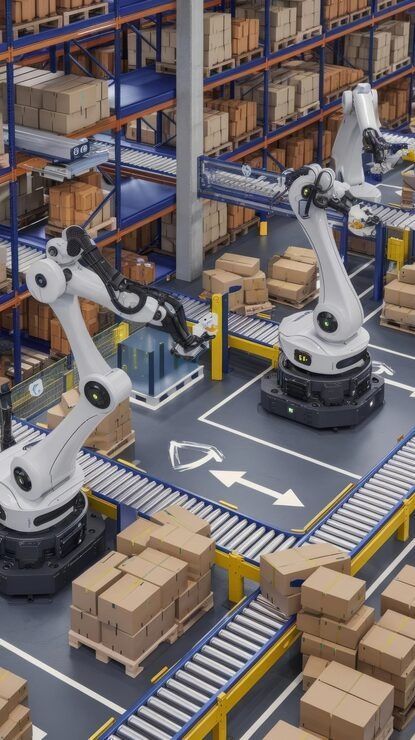
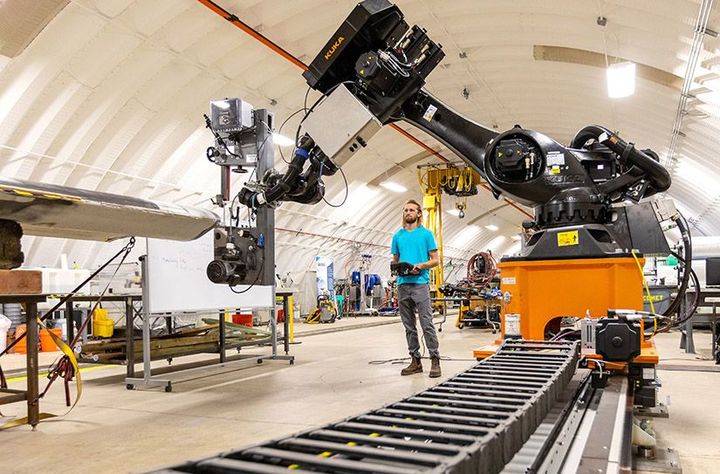
Another important trend is the use of automation and digital monitoring in composite manufacturing. Automated material placement, robotic handling, digital inspection, and production-data monitoring can improve manufacturing consistency and help identify process problems earlier.
Blade sustainability has also received increased attention. Composite blades are challenging to recycle because they combine fibers and polymer-based materials. During 2025–2026, research and industrial development continued to focus on recyclable resin systems, improved mechanical recycling, thermal processing, and alternative composite architectures.
The European Union's renewable energy and circular-economy policies have also encouraged greater attention to material efficiency and waste reduction. Meanwhile, governments in major wind markets continue supporting renewable electricity deployment and domestic clean-energy manufacturing.
Another emerging area is digital blade inspection. Drones, cameras, artificial intelligence, and image-analysis systems can help identify surface damage, erosion, cracks, and other visible abnormalities. These technologies can support inspection planning while reducing dependence on purely manual visual examination.
Technology Trends to Watch
- Larger offshore turbine blades
- Automated composite manufacturing
- Digital quality monitoring
- Drone-assisted blade inspection
- Artificial intelligence for defect detection
- Improved lightning protection
- Lower-impact composite materials
- Blade recycling and circular manufacturing
- Digital twins for performance monitoring
These trends show that blade manufacturing is moving toward greater automation, data use, material efficiency, and lifecycle planning.
Laws, Standards, and Renewable Energy Policies
Wind turbine blade manufacturing is affected by several layers of regulation and technical standards. Requirements differ between countries and projects, so manufacturers and developers generally need to consider local regulations alongside international technical standards.
Internationally recognized technical frameworks for wind turbine design and testing include standards developed through organizations such as the International Electrotechnical Commission. These standards address areas such as structural design, testing, safety, and turbine performance.
Environmental regulations can also influence manufacturing facilities. Depending on location, manufacturers may need to address emissions, industrial waste, chemical handling, workplace safety, and environmental permitting.
In the United States, federal and state renewable energy policies can influence wind development and domestic manufacturing. In Europe, renewable energy targets, industrial policies, environmental requirements, and circular-economy initiatives influence the broader wind sector.
India has also continued expanding its renewable energy framework, with national targets and programs supporting renewable electricity development. Wind projects can be affected by central and state-level policies covering land use, grid connectivity, environmental considerations, and project approvals.
For manufacturers, regulatory compliance is therefore not limited to the blade itself. It can also involve factory operations, worker safety, environmental management, transportation, testing, and project-specific requirements.
Tools and Resources for Learning and Planning
Several categories of tools can help students, engineers, researchers, manufacturers, and renewable-energy professionals understand wind turbine blade manufacturing.
Design and Engineering Tools
- Computer-aided design software
- Computational fluid dynamics platforms
- Finite element analysis tools
- Structural fatigue calculators
- Aerodynamic performance models
Manufacturing Tools
- Composite layup planning software
- Resin-flow simulation tools
- Production monitoring systems
- Digital inspection platforms
- Dimensional measurement equipment
Wind Resource Tools
- Wind-speed databases
- Wind resource maps
- Turbine performance calculators
- Capacity-factor estimation tools
- Energy production models
Learning Resources
- Renewable energy textbooks
- Engineering standards databases
- Government energy portals
- University research publications
- Technical training materials
- Wind energy research datasets
These resources can help users understand the relationship between blade design, manufacturing quality, wind conditions, energy output, and long-term turbine performance.
Frequently Asked Questions
What materials are commonly used to manufacture wind turbine blades?
Fiberglass-reinforced polymer composites are widely used. Carbon fiber can also be incorporated into structural areas where high stiffness is important. Resin systems, core materials, adhesives, coatings, and metal components are also used.
How are wind turbine blades made?
Blades are generally manufactured using large molds. Composite reinforcement materials are arranged according to a structural design, resin is introduced, and the material is cured. Major components are then bonded, finished, inspected, and tested.
Why are modern wind turbine blades so large?
Longer blades increase the swept area of a turbine, allowing it to interact with a larger volume of moving air. However, larger blades also require advanced structural engineering, manufacturing equipment, transportation planning, and inspection procedures.
Can wind turbine blades be recycled?
Recycling is possible, but composite blades are more difficult to recycle than many conventional materials because fibers are embedded within polymer matrices. Research continues into mechanical, thermal, chemical, and recyclable-composite approaches.
What standards are relevant to wind turbine blades?
International wind turbine standards address areas including structural design, safety, testing, and performance. Project requirements can also include national regulations, environmental rules, transportation requirements, and specific technical specifications.
Conclusion
Wind turbine blade manufacturing combines aerodynamic engineering, composite materials, precision production, structural analysis, and quality control. As wind turbines become larger and renewable electricity deployment expands, blade design and manufacturing processes are becoming increasingly sophisticated.