Equipment Longevity Guide: Maintenance Strategies for Industrial Machinery
Industrial machinery plays a central role in manufacturing, processing, construction, energy, logistics, and many other industries. Equipment such as CNC machines, industrial pumps, compressors, motors, conveyors, boilers, hydraulic systems, and production machinery is designed to perform demanding tasks repeatedly.
However, machinery does not maintain its operating condition automatically. Regular inspection, cleaning, lubrication, adjustment, testing, and preventive maintenance are important for keeping equipment dependable throughout its operating life.
An effective maintenance strategy is more than repairing a machine after a failure. It combines routine inspections, manufacturer recommendations, operating data, safety procedures, and condition monitoring to identify potential problems before they become serious.
This approach is commonly known as preventive maintenance or predictive maintenance, depending on how maintenance decisions are made. The broader goal is equipment longevity: maintaining machinery in a safe and reliable condition while supporting consistent industrial operations.
Why Equipment Longevity Matters
Industrial machinery represents a major part of an organization’s operational infrastructure. When important equipment develops a mechanical, electrical, hydraulic, or control problem, production activities can be disrupted.
A structured maintenance program can help address several common challenges:
- Unexpected equipment failures
- Excessive vibration and mechanical wear
- Lubrication problems
- Electrical faults
- Overheating
- Hydraulic and pneumatic leakage
- Poor alignment
- Reduced machine efficiency
- Premature component deterioration
- Workplace safety risks
Equipment longevity also matters because machinery performance can gradually change over time. Bearings may wear, belts can lose tension, seals can deteriorate, electrical connections can loosen, and moving components can become misaligned.
Routine monitoring makes these changes easier to identify.
Preventive Maintenance
Preventive maintenance follows a planned schedule. Activities may be performed according to operating hours, production cycles, calendar periods, or manufacturer recommendations.
Typical tasks include:
- Lubrication and oil inspection
- Filter replacement
- Belt and chain inspection
- Bearing examination
- Fastener checks
- Electrical connection inspection
- Cleaning and contamination control
- Safety-device testing
- Calibration checks
The schedule should reflect the actual operating environment. A machine exposed to dust, heat, moisture, vibration, or heavy loads may require different inspection intervals from equipment operating in a controlled environment.
Predictive Maintenance
Predictive maintenance uses equipment condition information to determine when maintenance attention may be required.
Common monitoring methods include:
- Vibration analysis
- Infrared thermography
- Oil and lubricant analysis
- Ultrasonic inspection
- Motor current analysis
- Pressure monitoring
- Temperature measurement
- Equipment performance tracking
These techniques can provide useful indications of developing problems. For example, an unusual vibration pattern may indicate imbalance, misalignment, bearing deterioration, or another mechanical issue.
Recent Maintenance Trends and Updates
Industrial maintenance has increasingly moved toward data-driven monitoring and energy efficiency. During 2025 and 2026, Indian industrial policy discussions and programs continued to emphasize energy efficiency, industrial modernization, and workplace safety.
The Bureau of Energy Efficiency reported that its 2025 Perform, Achieve and Trade framework covered 1,333 energy-intensive industries and represented about 55% of industrial energy consumption. This broader emphasis on energy efficiency is relevant to machinery maintenance because equipment condition can influence energy performance.
In April 2026, the Bureau of Energy Efficiency also highlighted the ADEETIE initiative for energy-efficient technologies in India's MSME sector. The program includes activities such as energy audits, project planning, implementation, and monitoring across industrial clusters and energy-intensive sectors.
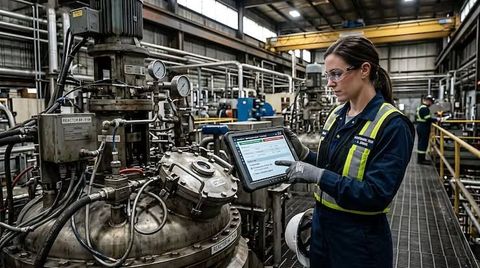
Another notable development is the increasing use of condition-monitoring technologies. Industrial facilities can combine sensors, machine data, vibration measurements, thermal monitoring, and analytics to identify abnormal operating conditions earlier.
Artificial intelligence and machine learning are also being explored for predictive maintenance. These technologies can analyze large quantities of equipment data and identify patterns associated with potential failures. However, automated predictions should be validated against engineering knowledge, equipment specifications, and physical inspection.
The trend is therefore moving from maintenance based only on fixed schedules toward a combination of preventive, predictive, and condition-based approaches.
Laws and Policies in India
Industrial machinery maintenance in India is connected with workplace safety, environmental requirements, energy efficiency, electrical safety, and industry-specific regulations.
The Occupational Safety, Health and Working Conditions Code, 2020 provides an important national framework concerning occupational safety and working conditions. The Ministry of Labour and Employment has continued work related to its implementation and associated rules. In 2026, the Ministry published updated material and FAQs concerning the OSH&WC Code and related labour codes.
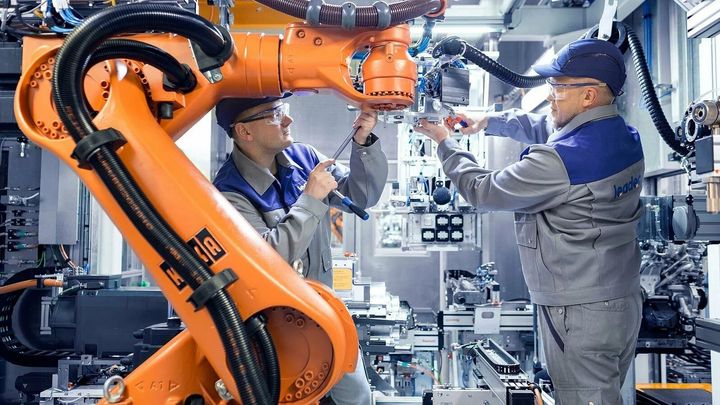
Maintenance activities should therefore be planned with worker safety in mind. Machinery should not be inspected, cleaned, adjusted, or repaired while hazardous movement or stored energy can expose workers to danger.
Facilities may also need to consider electrical safety requirements, pressure equipment provisions, fire safety requirements, environmental regulations, and state-specific industrial rules depending on the machinery and sector.
Energy efficiency is another relevant policy area. The Bureau of Energy Efficiency operates under the Energy Conservation Act, 2001, and develops policies and programs intended to improve energy efficiency across sectors.
Industrial organizations should check the latest central and state requirements applicable to their facility rather than relying on a general maintenance checklist alone.
Practical Maintenance Strategies
A strong equipment longevity program usually begins with an equipment register. Each machine can be assigned an identification number and documented with information such as model, operating hours, critical components, inspection frequency, and maintenance history.
Establish a Maintenance Schedule
Create maintenance intervals for daily, weekly, monthly, quarterly, and annual activities where appropriate.
A basic schedule may include:
| Maintenance Frequency | Typical Activities |
|---|---|
| Daily | Visual inspection, leaks, unusual noise, temperature |
| Weekly | Lubrication checks, cleaning, belts and guards |
| Monthly | Fasteners, electrical connections, alignment checks |
| Quarterly | Detailed condition inspection and performance review |
| Annually | Comprehensive inspection, calibration, major component assessment |
The actual interval should always be adjusted according to equipment specifications and operating conditions.
Monitor Critical Components
Not every component requires the same level of monitoring. Critical assets should receive greater attention because their failure could create significant operational or safety consequences.
For rotating machinery, important indicators may include vibration, bearing temperature, lubrication condition, alignment, and rotational performance.
For electrical equipment, maintenance teams may examine connections, insulation condition, temperature, current characteristics, and protective devices.
For hydraulic equipment, pressure, fluid condition, seals, hoses, valves, and contamination levels can be important.
Keep Maintenance Records
Maintenance records provide valuable historical information. A useful record can contain:
- Inspection date
- Equipment identification
- Observed condition
- Measurement results
- Maintenance activity
- Component replaced or adjusted
- Follow-up requirement
- Person responsible for inspection
Historical records can reveal recurring problems and help improve future maintenance schedules.
Tools and Resources
Several general tools can support an equipment longevity program without requiring complex systems.
Useful resources include:
- Preventive maintenance checklists
- Equipment inspection forms
- Lubrication schedules
- Maintenance logbooks
- Vibration measurement instruments
- Infrared temperature measurement tools
- Electrical testing instruments
- Oil analysis worksheets
- Equipment manuals
- Digital maintenance calendars
- Asset registers
- Energy monitoring meters
- Risk assessment templates
- Safety inspection checklists
Digital maintenance management platforms can also organize inspection schedules, equipment records, work histories, and maintenance notifications.
For energy-intensive facilities, energy monitoring and audit tools can help identify machinery that operates inefficiently. Maintenance teams can then compare energy performance with equipment condition and operating requirements.
Safety Considerations During Maintenance
Equipment longevity should never be separated from workplace safety.
Before maintenance begins, personnel should understand the machine’s hazards and the required isolation procedures. Electrical, hydraulic, pneumatic, thermal, mechanical, and gravitational energy may remain present even after normal operation stops.
Important practices include:
- Isolate hazardous energy before maintenance
- Verify that equipment cannot unexpectedly start
- Use appropriate personal protective equipment
- Keep machine guards correctly installed
- Follow documented maintenance procedures
- Use suitable tools and test equipment
- Keep maintenance areas clean
- Record identified hazards
- Verify safe operating conditions before returning machinery to production
Safety procedures should be based on the equipment, workplace conditions, applicable regulations, and organizational risk assessments.
Frequently Asked Questions
What is equipment longevity?
Equipment longevity refers to maintaining machinery in a reliable and usable condition over its intended operating life. Proper maintenance, suitable operating conditions, inspections, and timely component attention can support longer and safer equipment use.
What is the difference between preventive and predictive maintenance?
Preventive maintenance is normally performed according to a planned schedule. Predictive maintenance uses condition information, measurements, and equipment data to determine when maintenance attention may be appropriate.
How often should industrial machinery be inspected?
There is no single interval suitable for every machine. Inspection frequency depends on equipment design, operating hours, environmental conditions, criticality, manufacturer guidance, and applicable safety requirements.
Can sensors improve machinery maintenance?
Sensors can continuously or periodically monitor factors such as temperature, vibration, pressure, speed, or other operating conditions. This information can help identify unusual changes that may require further investigation.
Why are maintenance records important?
Maintenance records create a history of equipment condition and previous interventions. They can help identify recurring faults, improve inspection planning, and support decisions about component replacement or equipment improvement.
Conclusion
Industrial machinery longevity depends on consistent attention rather than occasional corrective action. Preventive maintenance, predictive monitoring, proper lubrication, inspection, alignment, cleaning, safety controls, and accurate recordkeeping all contribute to a structured equipment maintenance strategy.